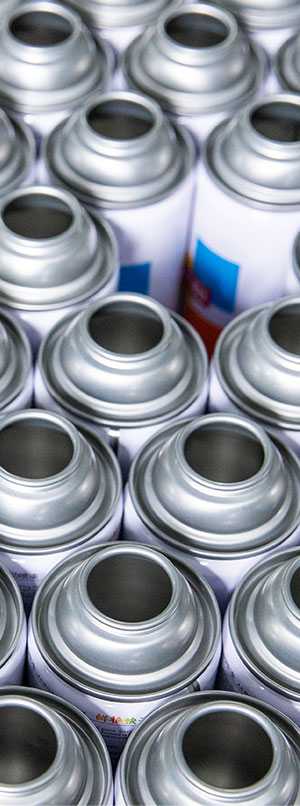
A coating may appear dry on the surface within minutes, yet that early change does not necessarily mean the film has reached its final condition. Drying behavior affects handling, recoating decisions, appearance, and workflow efficiency, particularly on components exposed to elevated temperatures. Understanding how temperature, humidity, substrate preparation, and curing conditions interact can make heat tolerant spray paint easier to evaluate for maintenance and manufacturing applications. Rather than focusing only on the temperature rating, professionals can also examine how quickly the applied film becomes surface-dry and fully dry under specified conditions.
Surface Drying And Full Drying Are Different
Surface drying describes the point at which the coating film has dried sufficiently at the surface, while full drying refers to a later stage in which the applied layer has dried through its intended film structure. These stages should not be treated as interchangeable measurements because they serve different practical purposes.
For aerosol coatings, a short surface-drying period can be useful during maintenance work where the coated component needs to move through a workflow without excessive waiting. However, touching the surface too soon or exposing it to demanding conditions before the recommended drying stage may affect the finish.
Humidity and temperature also influence evaporation and film formation. A specification measured at 25℃ and 60% relative humidity provides a defined reference condition, allowing users to understand the stated performance without assuming identical results under every working environment.
Reading Aerosol Paint Drying Specifications
Technical specifications become more useful when their testing conditions are considered alongside the reported time. For example, a surface drying time of 4–5 minutes at 25℃ and RH60% indicates the period measured under that particular environment rather than an absolute duration applicable to every project.
Full drying is a separate benchmark. The SANVO heat-resistant aerosol formulation specifies a full drying time of ≤60 minutes at 25℃ and RH60%, while its surface drying time is 4–5 minutes under the same conditions. Such figures can help maintenance teams plan handling and subsequent operations with greater clarity.
A practical distinction between these two stages also prevents a common misunderstanding: a coating that feels dry relatively quickly may still require additional time before the finished film reaches its specified dry condition. Treating the two measurements as separate pieces of technical information provides a more realistic basis for planning.
Temperature, Humidity And Application Conditions
Environmental conditions can change the drying process considerably. Temperature affects solvent evaporation and film formation, while relative humidity may influence how quickly moisture and volatile components leave the applied coating. Consequently, results obtained in a controlled specification test should not automatically be expected under significantly different conditions.
Substrate temperature deserves attention as well. A metal component sitting outdoors, inside a workshop, or near operating equipment may differ substantially from the ambient air temperature. Applying aerosol paint to a surface that is unusually cold or hot can alter application behavior and drying characteristics.
For professionals assessing heat tolerant spray paint, these variables should be considered alongside the intended service environment. A product specification offers a useful reference point, but the surrounding conditions still matter when translating laboratory or controlled-condition data into real maintenance work.
Preparing Surfaces Before Spraying
Drying performance cannot be considered independently from surface preparation. Oil, grease, dust, loose rust, and other contaminants may interfere with contact between the coating and substrate. Even a technically suitable formulation can produce inconsistent results when the underlying surface is poorly prepared.
A clean substrate provides a more stable foundation for the coating film. Depending on the material and condition of the component, preparation may involve cleaning, removing loose corrosion, or addressing an existing coating that is no longer firmly attached.
Application technique matters too. Aerosol spraying should be controlled so that the coating is distributed evenly rather than deposited excessively in one area. Consistent coverage can help reduce variations in film thickness, which may otherwise influence drying and appearance.
Conclusion
Technical drying figures have the greatest value when they are connected to an actual workflow. Surface-dry information can help with short-term handling expectations, whereas the full-drying specification offers a clearer reference for when the coating has progressed further through its drying process. Keeping those purposes distinct makes planning more straightforward.
For projects involving heated equipment, application timing should also be separated from service timing. A freshly coated component may need appropriate drying time before returning to its normal operating environment, and the relevant product instructions should take precedence over generalized assumptions.
Our team at SANVO considers specification details such as drying time and temperature range together because both influence how an aerosol coating fits a real application. A surface-drying figure of 4–5 minutes and a full-drying value of ≤60 minutes at 25℃ and RH60% give users concrete reference points, while the surrounding conditions determine how closely a particular job may follow those measurements.