Automotive parts rarely operate under one fixed condition. Exhaust assemblies, mufflers, and other engine-adjacent components may encounter substantial heat, vibration, moisture, and repeated temperature changes throughout their service life. Selecting high heat automotive spray paint involves more than finding a coating that looks suitable after application. The formulation, temperature range, substrate, finish, and application environment all influence whether an aerosol coating fits the intended automotive task. At SANVO, we view these factors as practical specifications that should be considered together rather than judged by appearance alone.
Why Automotive Heat Creates Coating Challenges
Heat affects automotive coatings in ways that ordinary body panels may not experience. Exhaust-related components can become significantly hotter than surrounding surfaces, while repeated starts and shutdowns create cycles of expansion and contraction. A coating that performs well on a cool exterior panel may not be appropriate for such conditions.
Thermal stress can become particularly noticeable on metal parts. As the substrate heats, its dimensions change slightly; cooling reverses that movement. Repeated cycling places mechanical demands on the coating film and makes adhesion an important consideration alongside temperature tolerance.
Exposure is not limited to temperature itself. Automotive components may also encounter road moisture, dust, oil residues, vibration, and other environmental factors. Consequently, coating selection should account for the complete service environment instead of focusing on a single performance characteristic.
Understanding Automotive Coating Formulation
The chemistry behind an aerosol coating influences how its film responds to heat. Acrylic resin, solvents, and pigments can be combined in different formulations to address particular application requirements, which is why products with similar appearances should not automatically be treated as interchangeable.
A high-temperature application also requires attention to the intended temperature range. The relevant figure should correspond to the temperature of the coated surface rather than simply the general temperature around the vehicle. Measuring or estimating the actual operating conditions can provide a more meaningful basis for product selection.
The question of whether high heat automotive spray paint is suitable should begin with technical specifications. Temperature capability, substrate recommendations, drying characteristics, and application instructions provide more useful information than broad descriptions such as “durable” or “strong.”
Matching The Coating To Vehicle Components
Exhaust pipes and mufflers are obvious examples of automotive parts that can experience considerable heat. Their geometry also presents practical application challenges, since curved sections, joints, and narrow areas may be less convenient to coat using conventional tools.
Radiators represent another type of heated component, although their operating conditions differ from exhaust assemblies. Understanding the specific part and its thermal environment helps prevent a generalized approach from being applied to components with different requirements.
Surface condition matters just as much. Before applying high heat automotive spray paint, grease, dirt, loose corrosion, and poorly bonded existing material should be addressed according to the product’s preparation instructions. A suitable substrate gives the coating a more consistent foundation.
SANVO Product Characteristics In Practice
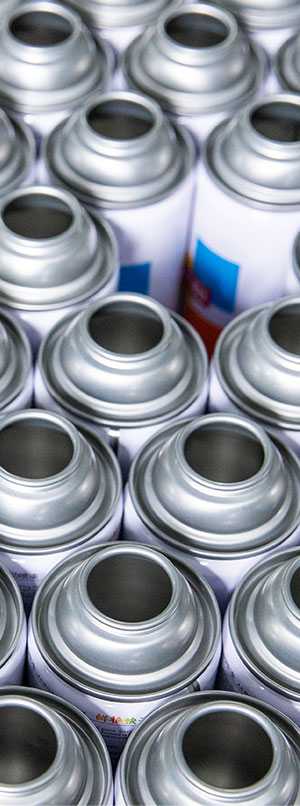
Our team at SANVO offers a heat-resistant acrylic aerosol formulation designed for surfaces operating from 400℃ to 600℃. Its main components are acrylic resin, solvent, and pigment, while the standard appearance is available in white and black, with customized colors also possible. The formulation is intended for high-temperature objects such as mufflers, exhaust pipes, radiators, heaters, grills, and chimneys.
Color selection can have a practical purpose beyond aesthetics. Automotive maintenance projects may require a particular appearance for refurbishment, identification, or consistency with existing equipment. Having standard color options alongside customization can be useful for different project requirements.
The product’s characteristics should still be assessed against the actual component. A temperature range provides an important technical reference, but substrate condition, application technique, exposure duration, and operating environment remain relevant when determining suitability.
Application And Maintenance Considerations
Aerosol application can be useful for automotive parts with irregular shapes because the spray format allows material to reach areas that may be awkward to access with a brush or roller. Controlled passes are preferable to depositing an excessive amount in one area, since uneven film thickness can affect the resulting finish and drying behavior.
Preparation should take place before spraying rather than being treated as a minor finishing step. Removing contaminants and loose material helps establish a cleaner surface, while following the manufacturer’s instructions provides a more reliable application process.
After coating, the component should be given the specified drying time and handled according to the product guidance. Returning a freshly coated part to demanding service conditions too quickly can interfere with the coating’s development, so application planning should account for both the work schedule and the equipment’s operating requirements.
Conclusion
Automotive heat-resistant coatings require a more specific evaluation than ordinary decorative aerosols. The temperature reached by the component, frequency of thermal cycling, substrate condition, environmental exposure, and formulation all contribute to the eventual performance of the coating. Exhaust parts may demand a very different solution from cooler exterior surfaces, even though both are made from metal.At SANVO, we focus on providing coating specifications that help professional users assess whether a product corresponds with the intended application. For projects involving high heat automotive spray paint, information such as the 400℃–600℃ operating range, acrylic-based formulation, and available white, black, or customized appearance options gives purchasers a clearer technical reference. The most practical selection comes from comparing those verified characteristics with the actual conditions of the vehicle component.