In industrial chemical production, ester solvents play an important role in coatings, adhesives, and surface treatment formulations. One of the commonly produced esters is ethyl acetate, which is widely used due to its balanced evaporation rate and solubility characteristics. Understanding how ethyl acetate is made in industry helps manufacturers improve process efficiency and raw material selection in large-scale production systems. As a chemical solution provider in coatings and related applications, SANVO focuses on stable formulation systems that support industrial manufacturing needs.
Industrial Production Routes and Reaction Mechanisms
In industrial practice, ethyl acetate is mainly produced through esterification and transesterification routes. The esterification method involves reacting ethanol with acetic acid under acidic catalysis, typically using sulfuric acid or solid acid catalysts in controlled reactors. The reaction conditions, such as temperature and water removal efficiency, directly influence conversion rates. In some systems, continuous distillation is used to improve yield. The second route involves transesterification, where esters exchange groups with alcohols under catalytic conditions to adjust solvent composition. When studying how ethyl acetate is made in industry, these two routes are the most widely applied in modern chemical plants, depending on feedstock availability and cost structure. In our production-related material selection process, SANVO considers similar reaction stability principles when developing solvent-based systems for coatings and adhesive applications.
Separation, Purification, and Process Control
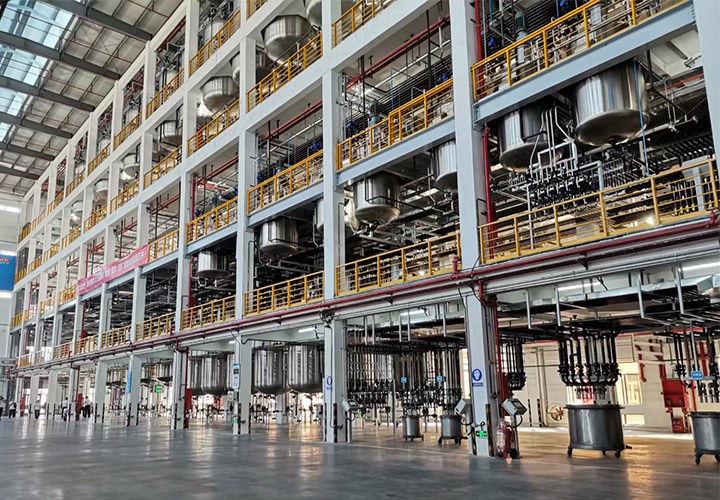
After the reaction stage, separation and purification are required to obtain usable ethyl acetate. Industrial systems commonly use fractional distillation to remove unreacted ethanol, water, and by-products. Proper control of reflux ratio and column temperature ensures solvent purity and consistency. In addition, industrial facilities often integrate emission control systems to manage volatile organic compounds generated during processing. Safety monitoring and closed-loop control systems are also applied to maintain stable operating conditions. In practical manufacturing environments, how is ethyl acetate made in industry is not only about the reaction itself but also about how purification and process control determine final product quality. SANVO applies similar process discipline in its chemical product systems, including coating-related raw materials such as rubber spray paint components used in industrial surface protection solutions.
Industrial Application Perspective and Material Relevance
From an application point of view, ethyl acetate is widely used in coatings, inks, adhesives, and cleaning formulations due to its moderate volatility and compatibility with multiple resin systems. In industrial manufacturing, understanding production methods helps formulators evaluate cost, environmental impact, and performance balance. When analyzing how is ethyl acetate made in industry, manufacturers often consider catalyst selection, energy consumption, and downstream compatibility with final formulations. SANVO operates in the coatings and adhesive chemical sector, providing material solutions that support OEM and bulk supply requirements for B2B customers. Our product system includes raw materials used in rubber spray paint formulations, which require stable solvent behavior and consistent evaporation profiles to support industrial coating performance across different substrates. Through structured production management and formulation experience, we maintain reliable chemical supply support for industrial users across various application scenarios.
Manufacturing Considerations and Industry Practice
In large-scale chemical production, process efficiency is closely linked to reactor design, heat management, and separation system integration. Continuous improvement in these areas allows manufacturers to optimize yield while maintaining operational safety. In addition, regulatory requirements for emissions and solvent recovery continue to influence how production systems are designed. This is why how is ethyl acetate made in industry is often studied not only as a reaction pathway but also as a full process engineering system involving reaction, purification, and environmental control. SANVO applies similar engineering awareness in its chemical supply chain to support stable and consistent material performance for coatings and adhesive industries. Our approach emphasizes practical industrial application rather than laboratory-scale chemistry, ensuring compatibility with real manufacturing environments.