Spray paint is designed to dry relatively quickly, but drying does not always mean that every chemical concern disappears immediately. If you have recently painted an object, you may ask, is dried spray paint toxic? The answer depends on the formulation, how completely the coating has cured, and how the finished surface will be used. Understanding these factors can help users make more informed decisions about aerosol coatings.
Is Dried Spray Paint Toxic After It Dries?
A dried paint film is generally different from wet spray paint because some volatile components have evaporated during drying. However, the fact that a surface feels dry does not automatically establish that every component has completely evaporated or that the coating is suitable for every exposure scenario.
Paint formulations vary considerably. Some contain solvents and other volatile ingredients, while others use water-based systems or different resin technologies. Therefore, is dried spray paint toxic? cannot be answered accurately for every product with a simple yes or no.
The safest approach is to evaluate the specific product. The manufacturer’s technical data sheet and safety data sheet can provide information about composition, hazards, recommended applications, and handling conditions. These documents are more reliable than judging safety solely from whether the surface feels dry.
What Happens When Spray Paint Dries?
Drying involves physical and, depending on the coating chemistry, chemical changes. In many solvent-containing coatings, volatile components leave the wet film as the coating dries. The remaining resin, pigment, and other nonvolatile components form the visible paint layer.
Drying time can vary according to the formulation and environmental conditions. Temperature, humidity, film thickness, airflow, and substrate can all influence how quickly a coating reaches its dry state.
For this reason, a stated drying time should be interpreted within its specified conditions. A coating that reaches surface dryness quickly may require additional time before it reaches the desired final performance.
Drying Is Not Always the Same as Full Curing
One important distinction is between surface drying and complete curing. Surface drying means the coating is no longer wet or readily transferable. Full curing refers to the development of the coating’s intended final properties.
These stages can occur at different rates. A paint may feel dry to the touch while its underlying film continues to develop hardness, adhesion, or other performance characteristics.
For professional applications, users should therefore follow the manufacturer’s specified drying and curing guidance. Placing heavy objects on a freshly painted surface, exposing it to demanding conditions, or applying another coating too quickly can affect the final result even when the surface initially appears dry.
What About Acrylic Spray Paint?
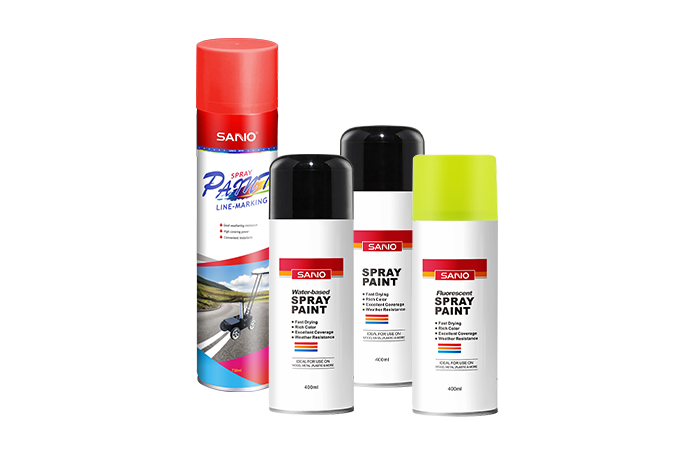
Acrylic spray paint is widely used for decorative and repair applications because it can provide quick application and drying. The official product information for SANVO acrylic spray paint states that it is suitable for metal, wood, ABS, vinyl, plastic, fiberglass, and other surfaces.
Its published product parameters specify surface drying in 4 to 5 minutes at 25°C and 60% relative humidity, with full drying within 60 minutes under the same conditions. These figures provide useful application guidance, but they should not be interpreted as a universal curing time for every environment or substrate.
The formulation is listed as acrylic resin, solvent, and pigment. The product page describes it as acid-free, non-toxic, and pH balanced, while also identifying a solvent smell. This illustrates why product-specific information matters when evaluating the safety of a dried coating.
Does a Non-Toxic Formulation Mean No Precautions?
No. A product described as non-toxic should still be used according to its label and safety documentation. Aerosol application creates a spray mist that should not be deliberately inhaled, and the presence of solvents means ventilation remains relevant during application.
The product’s stated non-toxic characteristic applies to its specified formulation and should not be generalized to all spray paints. Different aerosol coatings can contain different resins, solvents, pigments, and propellants.
Users should also distinguish between the condition of a dried surface and the conditions during spraying. The application stage generally presents a different exposure situation from handling a fully dried coating.
When Should a Dried Painted Surface Be Used?
The appropriate waiting period depends on the product and intended application. For ordinary decorative work, the manufacturer’s full-drying specification can provide a useful reference. For objects that will experience friction, moisture, chemicals, or frequent handling, allowing additional time can be prudent if recommended by the manufacturer.
The substrate also matters. Metal, wood, ABS, plastic, and other materials can interact differently with a coating. Surface preparation and coating thickness can likewise influence final performance.
If the painted object will be used in a sensitive environment or for a specialized purpose, do not assume that a general-purpose aerosol coating is automatically suitable. Confirm compatibility and intended use with the manufacturer before application.
Our Approach to Acrylic Spray Paint
We develop aerosol coating solutions for automotive, hardware, building-material, retail, and other markets. Our acrylic spray paint is designed for decoration and appearance repair and is available in more than 115 standard colors, with customized colors also offered.
We also focus on practical manufacturing requirements for business customers. Our aerosol capabilities support applications across hardware stores, vehicle repair shops, supermarkets, retail stores, and auto-parts businesses. This B2B focus means product consistency, documentation, customization, and application performance are important considerations alongside the formulation itself.
For customers evaluating a coating, we recommend considering the complete product information rather than relying only on whether the paint is described as dry or non-toxic.
How Can Users Handle Dried Spray Paint Responsibly?
First, follow the manufacturer’s recommended drying conditions and avoid assuming that a surface is ready for demanding use simply because it feels dry. Second, maintain ventilation during and immediately after application according to the product’s safety instructions.
For larger projects, a small test area can help establish how the coating behaves on the actual substrate. This is especially useful when the surface, temperature, humidity, or application method differs from the manufacturer’s stated conditions.
Finally, keep the product documentation available. If questions arise about chemical exposure, intended use, or re-coating, the current SDS and technical data sheet should be the starting point.
Final Answer: Is Dried Spray Paint Toxic?
So, is dried spray paint toxic? There is no universal answer for every formulation. Drying removes or reduces some volatile components, but the safety characteristics of the finished coating depend on its specific ingredients, curing state, intended use, and exposure conditions.
For acrylic spray paint, reviewing the manufacturer’s formulation information, drying specifications, and safety documentation provides a much more reliable assessment than assuming that every dried coating is either completely harmless or inherently toxic. Allow the coating to dry as directed, provide suitable ventilation during application, and follow the product-specific safety instructions for the intended use.