Every vehicle’s fuel system works quietly in the background, delivering the right amount of fuel to the engine at precisely the right moment. Over time, however, carbon deposits, varnish, and gum accumulate inside this system, gradually reducing efficiency. Using a quality fuel system cleaner is one of the most straightforward ways to address this buildup before it leads to costly repairs. This guide explains what fuel system cleaning actually does, how it works, and when it becomes necessary.
What Is the Fuel System and Why Does It Get Dirty?
The fuel system is responsible for storing and delivering fuel from the tank to the engine. Its main components include:
- Fuel tank: Stores gasoline or diesel
- Fuel pump: Transfers fuel from the tank toward the engine
- Fuel filter: Blocks dirt and debris from reaching the injectors
- Fuel injectors: Spray a precise mist of fuel into the combustion chamber for burning
Each time the engine runs, the combustion process leaves behind carbon residue. Even high-quality fuel cannot prevent this entirely. Over thousands of miles, these byproducts accumulate on injector nozzles, intake valves, piston crowns, and combustion chamber surfaces. The result is a gradual degradation of fuel delivery precision and combustion efficiency.
Is Fuel System Cleaning Actually Necessary?
The short answer is yes, particularly for vehicles that have accumulated significant mileage, are driven frequently on short trips, or operate in stop-and-go traffic conditions. These driving patterns prevent the engine from reaching its optimal operating temperature consistently, which accelerates deposit formation.
Consequences of a Dirty Fuel System
When fuel system deposits are left untreated, performance issues gradually develop into more serious mechanical and efficiency-related problems. Over time, contamination affects not only drivability but also long-term engine health.
- Reduced combustion efficiency: Carbon buildup disrupts proper fuel atomization, leading to incomplete combustion and lower engine output
- Increased long-term fuel consumption: The engine compensates for inefficient combustion by using more fuel to maintain performance levels
- Higher emissions output: Incomplete fuel burn results in increased hydrocarbon and particulate emissions
- Progressive injector wear: Deposits on injector nozzles can lead to uneven spray patterns and long-term degradation of fuel delivery precision
- Increased engine stress: Poor combustion quality forces the engine to operate under less optimal conditions, accelerating overall wear

How Does a Fuel System Cleaner Work?
A fuel system cleaner is a concentrated chemical formulation that breaks down and disperses deposits inside the fuel system as it circulates with the fuel during normal driving. Understanding the chemistry behind it helps explain why product quality matters.
The Cleaning Principle
The active solvents in a cleaner, commonly including compounds such as acetone, isopropanol, and dimethyl carbonate, chemically break down the molecular bonds that hold carbon deposits, varnish, and gum to metal surfaces. Once dissolved, these contaminants are either burned harmlessly through the exhaust or carried out of the system with the fuel flow.
What Gets Cleaned
- Fuel injection nozzles: Deposits narrow the spray openings and disrupt the atomization pattern, reducing combustion quality
- Intake valves: Buildup on valve surfaces restricts airflow entering the combustion chamber
- Piston crowns: Carbon buildup on piston tops raises compression inconsistently and increases knocking risk
- Combustion chambers: Residue inside the chamber affects flame propagation and thermal efficiency
- Fuel lines and tank: Gum and varnish restrict flow throughout the entire fuel delivery path
How to Use a Fuel System Cleaner
Knowing how to use fuel system cleaner correctly ensures the product delivers its full cleaning benefit without waste or risk to engine components.
Step-by-Step Application
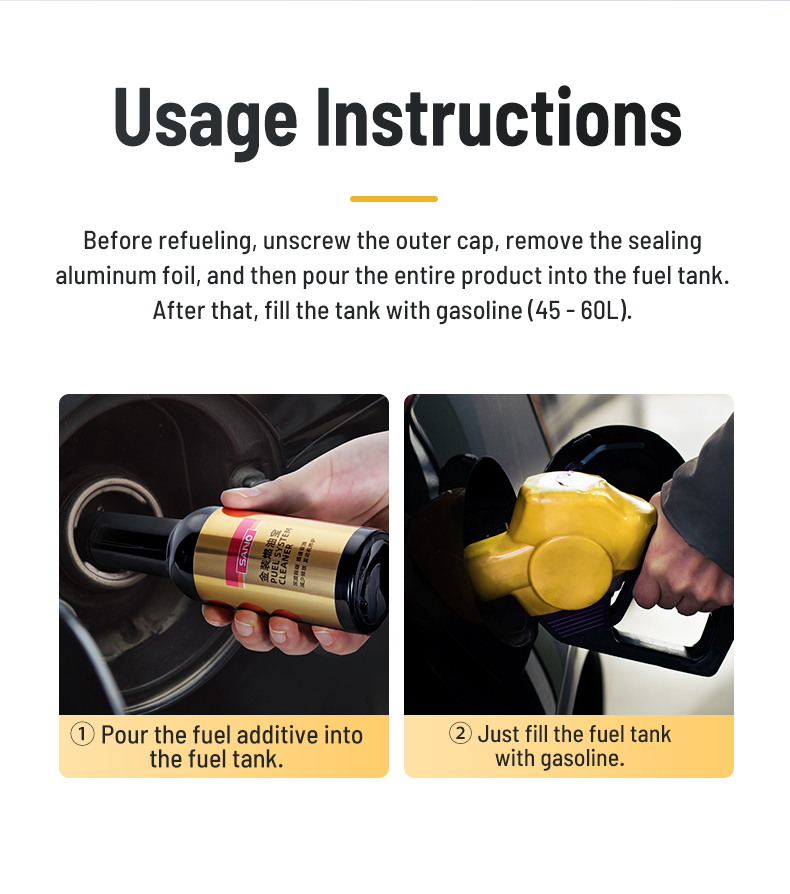
- Add the cleaner when the fuel tank is nearly empty: When the fuel level is low and close to refueling, pour one full bottle of SANVO Fuel System Cleaner directly into the fuel tank
- Refill with fresh fuel immediately: After adding the cleaner, fill the tank with gasoline. This helps the cleaning formula mix thoroughly with the fuel and distribute evenly throughout the system
- Follow the recommended treatment ratio: One bottle (65+15 ml) is designed to treat approximately 50 liters of fuel for optimal cleaning performance
- Drive normally: No special driving procedure is required. During normal operation, the cleaner circulates through the fuel pump, fuel lines, injectors, and combustion system, gradually removing deposits and improving fuel delivery efficiency
- Avoid mixing with other fuel additives: Do not use multiple fuel system cleaners or additives simultaneously, as this may reduce effectiveness or place unnecessary stress on fuel system components

SANVO Fuel System Cleaner: Formulated for Reliable Performance
For buyers sourcing a proven product backed by verified chemistry, SANVO offers a fuel system cleaner developed to address the full range of deposit-related engine issues.
The SANVO Fuel System Cleaner is formulated with acetone, isopropanol, and dimethyl carbonate, solvents specifically selected for their cleaning power, rapid evaporation, and compatibility with all fuel system components and related sensors, including oxygen sensors.
Product Features
- Rapid carbon removal: Quickly dissolves gum and carbon deposits from fuel injection nozzles, intake valves, piston crowns, and combustion chambers
- Engine power restoration: Improves power performance by restoring precise, unobstructed fuel delivery
- Fuel economy improvement: Cleaner combustion components reduce fuel waste per cycle, supporting better mileage
- Emission reduction: Cleaner combustion produces fewer harmful exhaust gases, supporting compliance with emissions standards
Conclusion
Carbon deposits form in every engine regardless of fuel quality or driving habits, and their effects compound over time. Understanding the functions, principles, and application of a fuel system cleaner helps automotive buyers make informed decisions about when and how to act.
For fleet operators, distributors, and automotive aftermarket buyers looking for a technically sound product for large-scale procurement, exploring SANVO‘s fuel system cleaner is a practical starting point. Clean fuel systems translate directly to better performance, lower operating costs, and longer engine life.