If you work with paints, coatings, adhesives, or industrial solvents, you may have encountered xylene and wondered, is xylene oil-based? The answer requires a little clarification. Xylene is not an oil in the same sense as vegetable oil or lubricating oil, but it is commonly produced from petroleum and belongs to the aromatic hydrocarbon family. This petroleum origin explains why it is widely used as a solvent in coating formulations.

Is Xylene Oil-Based or a Petroleum-Derived Solvent?
Xylene is an organic aromatic hydrocarbon with the molecular formula C8H10. It exists as three main isomers: ortho-xylene, meta-xylene, and para-xylene. According to PubChem, xylene occurs naturally in petroleum and coal tar, while industrial production commonly obtains it from petroleum.
Therefore, asking is xylene oil-based? can be answered with an important distinction. Xylene is petroleum-derived, but it is not an oil-based material in the everyday meaning of the term. It is a volatile liquid chemical solvent that can be separated and refined from petroleum-related feedstocks.
This distinction matters when discussing paints and coatings. In a formulation, xylene generally functions as a solvent rather than the main coating-forming material. It helps dissolve or disperse selected ingredients and can evaporate during the drying process.
Why Is Xylene Used in Paint and Coating Formulations?
Xylene has useful solvent properties for many industrial formulations. NIOSH explains that organic solvents are commonly used to dissolve, extract, or suspend substances that do not readily dissolve in water. These solvents are widely applied in paints, coatings, adhesives, lacquers, and cleaning products.
Xylene is particularly associated with paints, coatings, and rubber-related products. PubChem identifies its use as a solvent in paints and coatings, as well as in rubber cement and other industrial applications.
Its role therefore depends on the complete formulation. The presence of xylene does not automatically mean that a finished product should be described simply as oil-based paint. Manufacturers combine solvents with resins, pigments, propellants, and other ingredients to achieve particular application and performance characteristics.
Xylene in Rubber Spray Paint
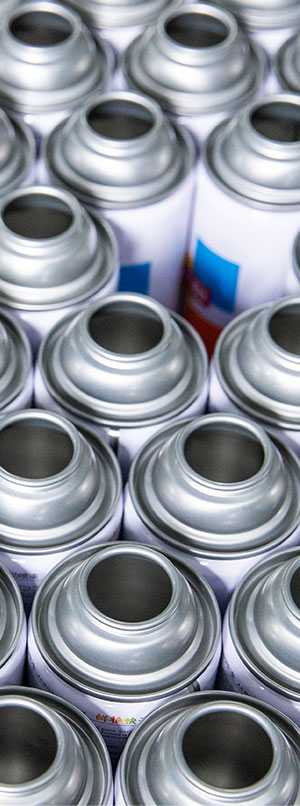
SANVO Rubber Spray Paint provides a useful example of how xylene can appear in a modern aerosol coating. The official product specification lists styrene-butadiene copolymer resin, pigments or powders, solvent oil, ethyl acetate, xylene, and DME among its main ingredients.
The formulation is designed as a natural-drying rubber coating agent for changing the color of vehicle bodies, wheel hubs, interiors, furniture, metal components, painted surfaces, glass, ceramics, and other suitable objects. The product is available in a 400 ml can and is offered in black and white background colors, fluorescent colors, metallic colors, and chameleon series.
The product specification also reports a surface drying time of 10 minutes and a full drying time of one hour. Its recommended construction temperature is 15 to 40°C, while the listed spraying area is approximately 0.65 square meters after four applications based on a 300 g net weight.
These details illustrate why ingredient terminology should be used carefully. Although xylene and solvent oil are both present, the finished coating is a formulated rubber spray paint rather than simply an oil product.
Does Petroleum Origin Mean Xylene Behaves Like Oil?
Not necessarily. Petroleum contains many different hydrocarbons, and refining separates materials with very different physical and chemical properties. Xylene is a relatively volatile aromatic hydrocarbon, while common petroleum oils generally contain heavier hydrocarbon mixtures with different boiling ranges and physical characteristics.
Xylene is also significantly different from lubricating oil in practical use. NIOSH describes xylene as a colorless, flammable liquid and identifies painters and furniture refinishers among workers who may encounter it through solvents, paint thinners, lacquers, and related products.
For this reason, the phrase oil-based should be interpreted according to context. When discussing coatings, it may describe a formulation that uses an organic solvent system rather than water as the primary carrier. It does not mean that the product consists primarily of crude oil or conventional lubricating oil.
What Should Users Check Before Choosing a Coating?
When comparing spray paints, looking only at whether a product contains xylene is not enough. The complete ingredient system, resin type, application method, drying characteristics, surface compatibility, and safety documentation should all be considered.
The product’s technical data sheet is particularly useful for understanding practical performance. For example, the Rubber Spray Paint specification gives its density as 0.92 to 1.05 g/cm³, spray rate as at least 96%, and filling ratio as a maximum of 85% of the total can volume.
Users should also consult the current safety data sheet before application. Because xylene is flammable and volatile, appropriate ventilation and ignition-source control are important when working with formulations containing it. NIOSH specifically identifies xylene as a flammable liquid and notes potential occupational exposure during painting and refinishing activities.
Our Approach to Rubber Spray Paint
At SANVO, we develop chemical products for practical applications across areas such as automotive, hardware, and building materials. Our rubber spray paint is designed to provide a convenient way to change surface color while forming a protective, peelable coating. We provide formulation and product information so buyers can evaluate applications, technical characteristics, and handling requirements before use.
For professional buyers and distributors, this information can also support product selection and specification comparisons. Rather than judging a coating solely by a single ingredient, it is more useful to evaluate the complete formulation and the performance requirements of the intended application.
Final Answer: Is Xylene Oil-Based?
So, is xylene oil-based? Xylene is not conventional oil, but it is a petroleum-derived aromatic hydrocarbon that is widely used as an organic solvent. Its petroleum origin explains the common association with oil-based formulations, but xylene itself should be understood as a specific chemical solvent rather than simply an oil.
In products such as rubber spray paint, xylene is only one component of a broader formulation. The resin, pigments, other solvents, propellant, and application requirements all contribute to the final product’s behavior. For accurate product selection, always review the manufacturer’s specifications and safety documentation rather than classifying a coating from the presence of xylene alone.