Staring at an old cabinet or a blank wall. You’re ready for a transformation. But in the tool aisle, you’re stuck. Do you grab a can of spray paint or a trusty brush and roller?
This is a common DIY dilemma. The truth is, there’s no single winner. The best choice depends entirely on your project. This guide will break down the spray paint vs brush debate. We’ll explore each method’s strengths. You’ll learn how to pick brush vs spray paint for the job.
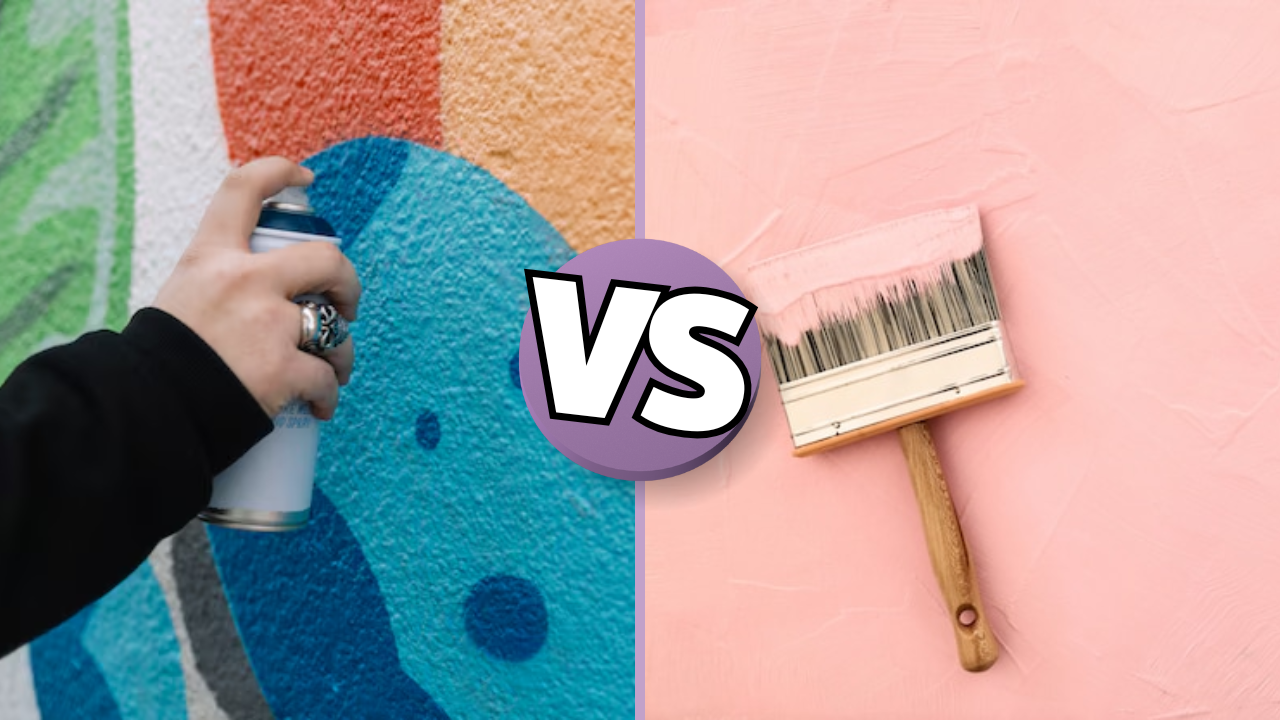
Brush Painting?
Brush painting is the classic method. It uses a brush or roller to apply liquid paint. You physically spread the paint onto a surface.
It’s a hands-on process. You have direct control over the paint flow. This method is familiar to most people. It’s how many of us painted our first piece of furniture.
Key tools for brush-on paint include:
- Various brush sizes and shapes.
- Paint rollers and trays.
- Standard cans of liquid paint.
Spray Painting?
Spray painting uses a device to atomize paint. It turns liquid paint into a fine mist. This mist is sprayed onto a surface.
You can use aerosol cans or electric/air-powered sprayers. The result is a smooth, factory-like finish. It’s efficient for covering large or complex areas.
Key tools include:
- Aerosol spray paint cans.
- Surface cleaning tools.
Spray Paint vs Brush: The Detailed Comparison
Let’s compare spray paint vs brush across key factors.
| Factor | Spray Paint | Brush Paint |
| Finish Quality | Very smooth, professional, no brush marks. | Can show brush or roller strokes. |
| Speed | Extremely fast for coverage. Slower setup. | Steady, methodical pace. Faster setup. |
| Skill & Difficulty | Requires technique to avoid runs. | Easier to start. More forgiving for beginners. |
| Cleanup & Prep | Extensive masking needed. Cleanup can be messy. | Minimal prep. Easy brush/roller cleaning. |
| Flexibility | Great for complex shapes, details, and large flats. | Excellent for touch-ups, corners, and small areas. |
| Cost | Cheap per unit. | Low initial cost. Very budget-friendly. |
How to Choose: Spray or Brush for Your Project?
So, when do you choose spray paint vs brush? Here are some clear scenarios.
1. Choose Spray Paint Without Hesitation
Use a sprayer or cans when your priority is a perfect, efficient finish.
- Large, Flat Surfaces: Fences, walls, and garage doors. A sprayer completes these jobs in a fraction of the time.
- Intricate Objects: Wicker chairs, ornate railings, or wire fencing. A spray coat reaches every nook a brush can’t.
- Smooth Furniture: For a modern, shiny look on cabinets or tables, spraying is superior. It avoids brush marks on large wood panels.
- Metal Projects: Car parts, metal shelves, or garden tools. Spray paint provides a uniform, protective coat that resists rust well.
For these projects, asking “are paint sprayers worth it?” is easy. The answer is a resounding yes. The time saved and quality achieved make them invaluable.
2. Choose Brush Paint with Confidence
Reach for a brush when your project demands control, simplicity, and precision.
- Small Projects & Touch-Ups: Painting a single door, a small shelf, or touching up chips on baseboards.
- Detailed Trim Work: Crown molding, window frames, and baseboards. A brush gives you the control to create sharp, clean lines.
- Textured Surfaces: Stucco walls or heavily grained wood. A brush or roller is better at pushing paint into textures.
- Situations with Overspray Concerns: Painting indoors near furniture or in a small garage. Brush-on paint contains the mess.
- Beginners and Quick Jobs: If you’re new to DIY or just need a quick coat, a brush is the safest, easiest choice.
Final Tips
The spray paint vs brush battle has no universal champion. Your project is the judge.
Remember this simple rule:
- Use spray paint for speed and a flawless finish on large or complex items.
- Use a brush for control, simplicity, and small-scale or detailed work.
Don’t get stuck in the aisle. Assess your project’s size, shape, and your desired outcome. Now, you have the knowledge to choose paint brush vs sprayer wisely. SANVO is a well-known brand in the fine chemical industry, offering a range of spray paints known for excellent quality and performance, making it easier for you to create shiny spray paint.
If you need to spray paint any surfaces, visit SANVO website to choose an efficient solution!