Your engine works hard every day, and over time, carbon deposits, friction, and fuel degradation take a toll on its performance. Fuel additives are chemical compounds added to gasoline or diesel to address these issues directly, helping engines run cleaner, smoother, and more efficiently. But what exactly are they, and do fuel additives work? This guide breaks it all down.
What Are Fuel Additives?
Fuel additives are concentrated liquid chemical formulations added to gasoline or diesel fuel to improve fuel quality and support engine performance. They typically contain active ingredients such as detergents, lubricants, antioxidants, corrosion inhibitors, and moisture-control agents.
Unlike fuel itself, additives are used in small amounts and mixed directly into the fuel tank. As the treated fuel circulates through the system, the additive can help keep fuel injectors, intake components, and combustion areas cleaner while protecting metal parts from rust, oxidation, and wear.
Fuel additives are commonly used in passenger cars, commercial vehicles, motorcycles, generators, and other fuel-powered equipment. To maintain their effectiveness, they should be stored in a cool, dry environment away from direct sunlight and excessive heat.

How Do Fuel Additives Work?
- Modifying Fuel Chemistry
For gasoline engines, octane improvers increase the fuel’s resistance to premature ignition, effectively eliminating engine knock and ensuring smooth, controlled combustion. For diesel powertrains, cetane enhancers shorten ignition delay, allowing the fuel to ignite more rapidly and efficiently after injection.
- Cleaning Deposits
Detergent-based additives chemically dissolve the stubborn carbon residues that accumulates on fuel injectors and intake valves. By clearing these restrictive deposits, the additive restores the optimal spray pattern and precise air-to-fuel ratio, reversing power loss and elevated fuel consumption.
- Protecting Engine Components
To mitigate physical and chemical wear, corrosion inhibitors form a flexible microscopic protective barrier on metal surfaces, protecting the fuel system from moisture-induced oxidation. Concurrently, advanced lubricity agents reduce friction within moving parts, significantly extending the operational lifespan of high-pressure fuel pumps and injectors.
- Stabilizing Stored Fuel
Fuel left stagnant for extended periods undergoes thermal oxidation, leading to the formation of harmful gum and varnish. Stabilizer additives interrupt this degradation process, preserving the fuel’s chemical integrity and preventing fuel-line clogging during prolonged storage.
Do Fuel Additives Work?
This is a common question, and the honest answer is: yes, when the right product is used for the right purpose. High-quality fuel system cleaners are particularly effective at scrubbing carbon buildup, which directly improves performance and fuel economy. Stabilizers genuinely preserve fuel integrity during storage. Lubricity additives do reduce wear on engine parts.
Who Benefits Most from Fuel Additives?
- Vehicles with high mileage that have accumulated significant deposit buildup
- Cars that sit unused for long periods, where fuel stabilizers can be particularly useful
- Drivers in humid or corrosive environments
- High-performance vehicles requiring higher octane fuel
- Fleet operators looking to reduce long-term maintenance costs
In many cases, regular use of fuel additives can also help maintain more consistent engine performance over time under varying driving conditions.
SANVO Fuel Additives: Built for Engine Performance
SANVO Fuel Additives are developed with cleaning activators, antioxidants, and corrosion inhibitors. According to product specifications, the formula is designed to clean the fuel intake system of automotive engines, supporting routine fuel system maintenance and helping maintain consistent engine operation over time.
As a multi-functional fuel treatment solution, it is formulated for users seeking a single product that supports both cleaning and protection within regular engine care routines.
Product Features
- Strong lubricity: Provides effective lubrication to engine components, reducing friction and wear
- Good permeability: Penetrates deeply into the fuel system for thorough action
- Moisture removal: Displaces water from the fuel system to prevent corrosion and misfires
- Noise elimination: Quiets engine noise associated with deposit buildup and poor lubrication
- Rust prevention: Offers dual-action lubrication and corrosion protection for metal components
As a leading fine chemical manufacturer listed on the Hong Kong Stock Exchange, SANVO brings over 30 years of industry experience and more than 50 registered patents to its automotive chemical product line.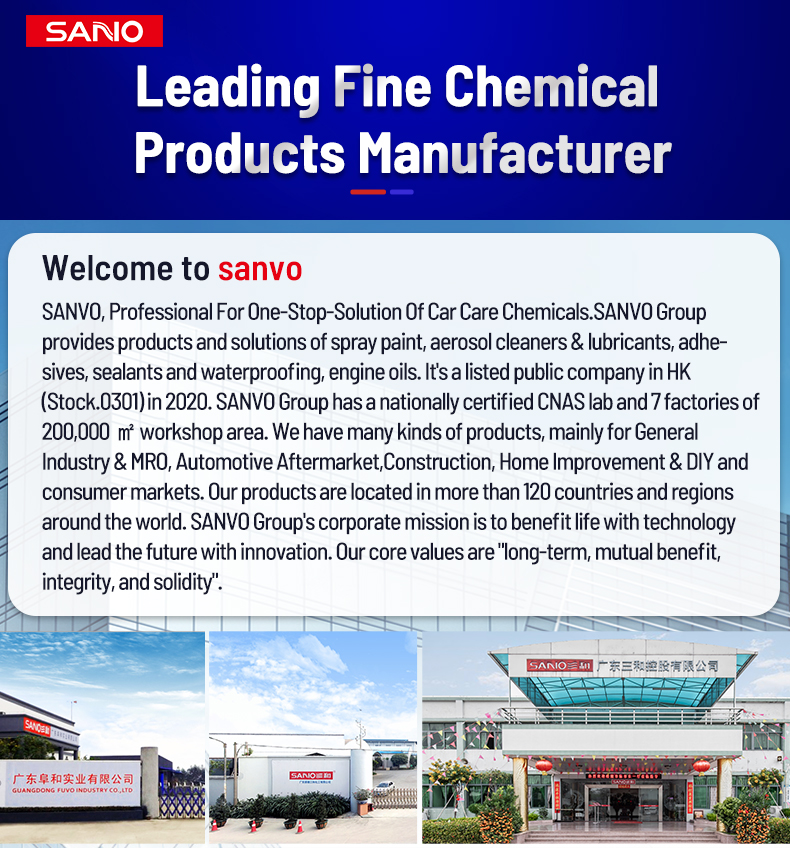
Final Thoughts
Fuel additives play an important role in maintaining fuel quality and supporting long-term engine performance by addressing deposit formation, fuel degradation, corrosion, and inefficient combustion.
Understanding the function and application of different additive types helps distributors and procurement teams select the right solution for specific engine conditions and market needs.
SANVO Fuel Additives provide a reliable option for partners seeking a multi-functional fuel treatment product backed by established chemical manufacturing expertise.