You wash the windshield, dry it, and it looks spotless in the driveway. Then the low evening sun hits the glass, and the whole surface turns hazy.
That mismatch usually means the problem is not ordinary dirt. A thin, oily layer is sitting on the glass, and everyday cleaning tends to spread it around instead of lifting it. This guide covers where that layer comes from, why it lingers, and what removes it.
What Is Windshield Oil Film, and Where Does It Come From?
Windshield oil film is a greasy, water-repelling layer that builds up on glass from both outside and inside the vehicle. Because it is thin and clear, most drivers notice it only when light hits the glass at an angle.
What Is Oil Film Actually Made Of?
Oil film is a mixture of road and vehicle residue, and no single formula describes it. Road film is mostly organic material, such as unburned fuel, lubricating oil and combustion by-products from passing traffic.
Its makeup also shifts with the calendar. Winter road salt, anti-icing materials and leaked vehicle fluids add to the mix, and farm runoff can appear in warmer months. That variety is one reason cleaning products for road film are difficult to design.
Why Does Oil Film Build Up on Both Sides of the Glass?
Oil film forms outside from traffic emissions and restaurant oil smoke, and inside from contaminants generated within the vehicle. Exhaust pollutants gather on glass in dense traffic, and cars parked near restaurants can pick up oily smoke.
Inside, the source is often the dashboard. Interior plastics give off vapors that leave an oily haze on the glass. Smoke or vape residue can turn that haze into a yellow-brown layer.
Common sources at a glance:
- Outside: exhaust residue, road spray, restaurant oil smoke
- Inside: dashboard and plastic off-gassing, smoke or vape residue
Why Do Regular Cleaning Methods Leave Glass Looking Dirty?
Regular cleaning leaves glass hazy because oil film repels water, so a wet wipe or a wiper blade smears it instead of removing it. The film is hydrophobic, and when moisture meets it, wiping causes streaking or fogging.
The cleaning tool matters too. Paper towels leave lint and can push oily film around, while clean microfiber picks it up. As a result, the glass can look clean until the light changes angle.
Cleaner choice adds another wrinkle. Household glass cleaners often contain ammonia, which can damage window tint and leave residue behind.
How Does Leftover Film Affect Visibility and Wiper Performance?
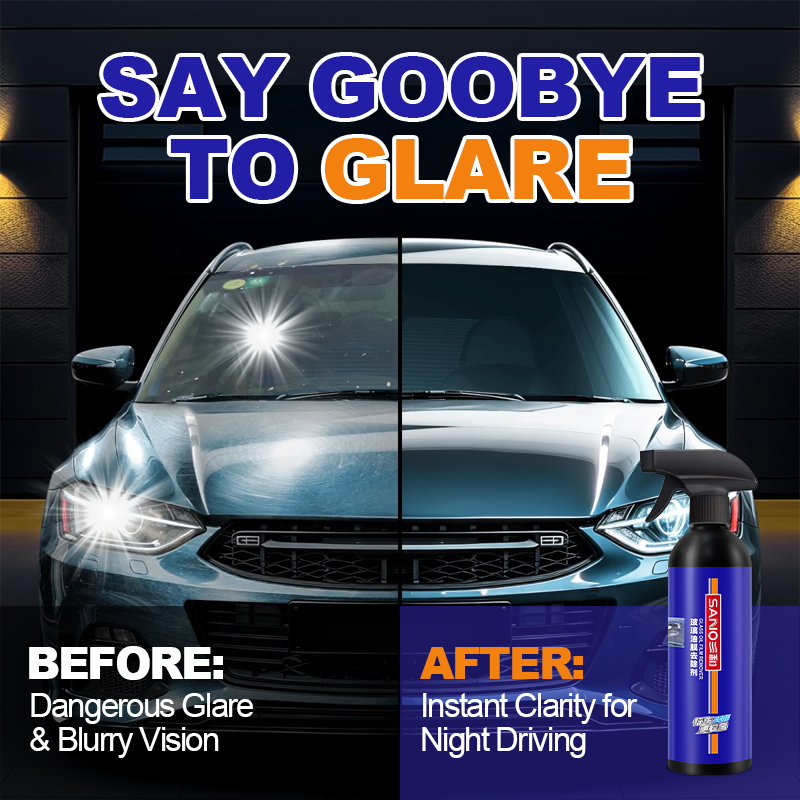
Leftover film mainly hurts visibility through glare and streaking. The American Optometric Association notes that a dirty, streaked or fogged windshield can cause glare and reduce visibility. A patent filing adds that the film can make glass act like a mirror in a dark cabin and increase glare from bright lights.
Wipers add to the problem when they are dirty. Dirty wiper rubber can streak even perfectly clean glass, so the blades belong in the same cleaning routine as the glass.
| Cleaner type | Typical job | Tint check |
| Household glass cleaner | Fingerprints and dust on home windows | Often contains ammonia, which can damage tint film |
| Auto glass cleaner | Routine cleaning of car glass | Look for an ammonia-free label |
| Dedicated oil film remover | Built-up oily residue that ordinary cleaning leaves behind | Confirm tint compatibility on the label or product page |
How Does SANVO Glass Oil Film Remover Solve the Problem?
SANVO’s Glass Oil Film Remover is a glass cleaner aimed at traffic film, oily residue and water-spot buildup on automotive glass. SANVO is a fine-chemical manufacturer whose markets include the automotive aftermarket.
Which Oil Film Problems Is It Built to Handle?
The formula addresses five problems that show up in daily driving:
- Traffic film, oily residue and water spots: it breaks down this buildup.
- Smudges and white residue: it is designed to help leave automotive glass clear without white residue or smudges.
- Tint and mirror safety: the pH-balanced, non-abrasive formula is listed as safe for windshields, side windows, mirrors and tinted glass.
- Wiper chatter and skipping: it removes the contaminants that cause both.
- Range of use: cars, trucks and SUVs, plus household glass surfaces.
For a car care shop, that means one product can cover windshields, mirrors and side glass.
Introduce SANVO Glass Oil Film Remover
SANVO Glass Oil Film Remover is a cleaner with a listed 1:1 dilution ratio and a three-year expiration date, made in Guangdong, China. The key specifications of this product include:
| Parameter | Listed value |
| Type | Cleaner |
| Dilution ratio | 1:1 |
| Material | Plastic |
| Brand | SANVO |
| Expiration date | 3 years |
| Place of origin | Guangdong, China |

Established in 1994, SANVO supports global B2B customers through OEM, ODM, customization, wholesale, and distributor services, providing flexible production solutions for different business needs. The company also offers multilingual support and training resources for distributors, along with a free sample request option to help potential partners evaluate its products before cooperation.

FAQ: Glass Oil Film Remover Questions
What Is a Glass Oil Film Remover, and How Does It Differ From Standard Glass Cleaner?
A glass oil film remover is a cleaner formulated for oily residue, road film and water-spot buildup instead of everyday dust and fingerprints. Standard glass cleaners handle light dirt, but oil film is a water-repelling layer that wiping tends to smear. SANVO offers a remover designed for cleaning common vehicle surface contaminants, including traffic film, oily residue, and water spots.
How Do You Use a Glass Oil Film Remover for a Streak-Free Result?
Work in the shade, apply the cleaner to a microfiber towel, and buff the glass dry with a second towel. Follow the product label first. SANVO recommends a 1:1 dilution ratio for this product. Users should refer to the product label or technical documentation for detailed mixing instructions. The routine below is common practice for auto glass:
1.Park in the shade. Direct sun dries the surface too soon for you to spread the product evenly.
2.Apply to the towel. On warm glass, putting the cleaner on the towel instead of the glass prevents quick evaporation.
3.Clean, then buff. One towel lifts the film, and a second dry towel removes leftover cleaner before it dries into streaks.
4.Wipe the wiper blades. Dirty rubber streaks the next time it rains.
What Is the Best Glass Cleaner for Cars When Oil Film Is the Problem?
The best choice is an ammonia-free cleaner made for auto glass and aimed at oily residue. Glass-specific, ammonia-free formulas are recommended because they are safe for tinted windows. Three checks help when choosing a product:
·The label says ammonia-free or tint-safe.
·It names oily residue or road film, not just dust.
·It gives clear application or dilution directions.
Distributors and shops can use the same checklist when comparing suppliers.
Is It Safe for Tinted Windows and Household Glass?
SANVO‘s remover is designed for use on tinted glass and can also be applied to household glass surfaces. The pH-balanced, non-abrasive formula is the stated reason. Tint makers give different cleaning guidance, though, so checking the instructions for your specific film is still sensible.
Conclusion: What Should You Remember About Oil Film?
Oil film is often difficult to see directly and may appear as a thin, clear layer or haze under certain lighting conditions. Because it can repel water, removing it requires a product and technique designed for this type of residue. Key points:
·Oil film builds up from traffic residue outside and interior off-gassing inside.
·Ordinary wipes, paper towels and wiper blades tend to smear it.
·Ammonia-free, glass-specific cleaners are the safer choice around tint.
·SANVO Glass Oil Film Remover targets this residue, and SANVO supports wholesale, OEM/ODM and distributor partnerships.
If you are evaluating options for your market, SANVO’s team can share samples and OEM/ODM details.