Spray paint is designed to deliver a coating efficiently, but the application process changes the way people interact with the product. Instead of handling paint as a liquid, spraying releases it as a fine mist. That makes the working environment an important part of product safety. If you are asking, are spray paint fumes toxic?, the most accurate answer depends on the formulation, the amount released into the air, and the conditions in which it is applied.
What Actually Enters the Air During Spraying?
The term “fumes” can be misleading because spray painting may involve both airborne paint droplets and volatile substances. The aerosol itself can create a fine mist, while solvents in the formulation can evaporate into the surrounding air.
These airborne materials are not necessarily identical from one product to another. A conventional solvent-based acrylic aerosol can have a different exposure profile from a water-based formulation. Consequently, users should evaluate the specific product instead of assuming that every spray paint produces the same type or level of airborne exposure.
The application method also matters. Spraying several coats in a small workshop can produce considerably different conditions from applying a small amount outdoors with unrestricted airflow.
Why Does the Formulation Matter?
A spray paint formulation may contain resin, pigment, solvent, and propellant. These components perform different functions and can influence the product’s spray behavior, drying characteristics, and airborne emissions.
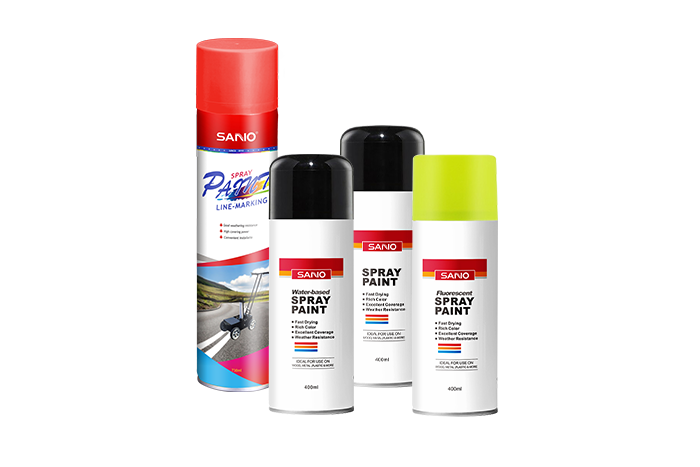
The technical data for SANVO acrylic spray paint identify acrylic resin, solvent, and pigment as the main components. The product is described as an acrylic aerosol paint intended for decoration and appearance repair on materials including metal, wood, and ABS.
This information is important when evaluating are spray paint fumes toxic? because the chemical composition determines what may be released during application. A product’s SDS should therefore be reviewed for the specific hazards associated with inhalation and other forms of exposure.
Why Is the Spray Stage Different From the Finished Coating?
A common mistake is to judge the safety of a spray paint based only on the properties of the dried film. During application, the coating is being dispersed through the air, creating an exposure situation that does not exist in the same way after the material has formed a stable film.
For this reason, the main precautions should be concentrated on the spraying process. Users should prepare the workspace before opening the can, establish suitable airflow, and avoid positioning themselves directly in the path of the spray.
Drying time also should not be confused with an exact exposure endpoint. SANVO’s acrylic spray paint is specified to surface-dry in 4 to 5 minutes and fully dry within 60 minutes at 25°C and 60% relative humidity. These are product performance specifications, not a universal guarantee that all airborne substances have disappeared at those times.
How Does the Workspace Change Exposure?
The same aerosol can behave very differently depending on where it is used. A large, well-ventilated area allows airborne material to disperse more effectively, while a small enclosed room can allow concentrations to build.
Professional spray-finishing operations therefore require more than simply opening a nearby window. The ventilation system needs to be appropriate for the quantity and type of material being applied. For larger operations, dedicated spray areas or booths can provide more controlled airflow.
The direction of airflow matters as well. Ideally, contaminated air should be moved away from the worker’s breathing zone rather than across it. Poorly positioned fans can sometimes redistribute airborne material instead of effectively removing it.
Does a Strong Smell Mean Greater Toxicity?
Not necessarily. Odor is a sensory characteristic and should not be used as a chemical hazard measurement. Some substances can be detectable by smell at relatively low concentrations, while other hazardous substances may have little noticeable odor.
The published parameters for the acrylic spray paint describe its odor as a solvent smell. This confirms that the formulation has a noticeable solvent characteristic, but odor alone cannot determine whether an exposure is safe or unsafe.
This is why relying on smell as a signal to stop spraying is poor practice. A better approach is to follow the product’s SDS, application instructions, and workplace exposure-control procedures.
What Makes Acrylic Spray Paint Different?
Acrylic spray paint is commonly selected for its combination of application convenience, drying speed, and decorative performance. The product we manufacture is described as fast drying, with good color rendering, coverage, and adhesion. It can be used across applications involving plastics, furniture, DIY projects, and the automotive industry.
Our published product information also describes the formulation as acid-free, non-toxic, and pH balanced. These characteristics are relevant to product selection, but they should not be interpreted as permission to inhale the aerosol. Safe application still requires attention to ventilation and the product’s handling instructions.
For buyers comparing aerosol coatings, this distinction helps separate a product’s formulation claims from the exposure conditions created during application.
How Should Users Manage Spray-Paint Exposure?
Start with the product documentation. The SDS can identify relevant hazards and recommended controls, while the technical data sheet explains application conditions and performance characteristics.
Next, prepare the surface and workspace before spraying. The manufacturer’s application guidance recommends cleaning the surface, shaking the can vigorously before use, maintaining the proper spraying distance,, and applying several thin coats. It also recommends wearing a mask and gloves during use.
Thin coats can also reduce unnecessary overspray and improve the final appearance. Allowing appropriate drying between coats helps avoid excessive material buildup and reduces the need for repeated corrective spraying.
What Should Businesses Consider When Buying Spray Paint?
For distributors and professional users, the question is broader than whether a product produces fumes. Buyers should consider the formulation, application environment, substrate compatibility, drying performance, packaging, and available documentation.
We supply acrylic aerosol coatings for markets including hardware stores, vehicle repair shops, retail stores, and auto-parts businesses. Our product range includes more than 115 standard colors, with customized colors available for customers with specific requirements.
We also provide customized aerosol solutions covering options such as color, packaging, formula, and accessories. This can help B2B customers select a coating system that matches their market and application requirements rather than treating every spray paint as interchangeable.
Final Answer: Are Spray Paint Fumes Toxic?
So, are spray paint fumes toxic? Spray-paint application can create inhalation exposure to airborne mist and volatile components, but the specific hazard depends on the formulation and the conditions of use. There is no single exposure profile that applies to every aerosol coating.
The practical solution is to evaluate the actual product rather than relying on smell, product category, or drying time. Review the SDS, maintain suitable airflow, follow the application instructions, and use the recommended protective equipment. For professional operations, controlled ventilation and appropriate workplace procedures provide a more reliable approach to managing exposure.
For our acrylic spray paint, the published specifications provide clear information about its formulation, applications, drying characteristics, and stated product properties. Evaluating these details together with the working environment allows users and B2B buyers to make a more informed coating decision.