The arrival of cold weather brings a common and pressing dilemma for construction crews, renovation contractors, and insulation specialists: “Can you use spray foam in cold weather?” Project timelines and client commitments don’t always align with ideal summer conditions, forcing professionals to work in lower temperatures. The direct answer is yes, but a successful application requires a clear understanding of the science behind the material’s cure and a strategic approach to product selection and on-site practice. Unlike fair-weather products, a professional-grade formulation like SANVO’s PU Foam Spray is engineered with parameters that support its use in challenging environments, providing a reliable solution for sealing and insulating projects even as the temperature drops.
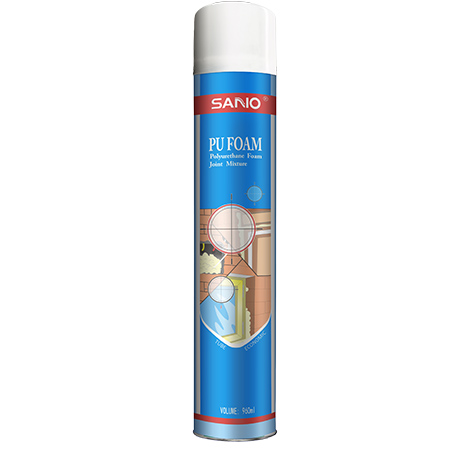
Applying spray foam in cold conditions introduces specific challenges because the product relies on a chemical reaction with moisture in the air to cure. As temperatures fall, this reaction slows significantly. This can lead to poor expansion, a tacky surface that doesn’t skin over properly, and dramatically extended cure times, which can delay subsequent work stages. However, these obstacles are manageable. The key lies in controlling what you can: always store product cans indoors at room temperature (above 15°C) for at least 24 hours before use, ensure substrates are clean, dry, and free of frost or ice, and apply during the warmest part of the day. Fundamentally, success depends on using a product designed for resilience. SANVO’s spray foam is specified for a cured foam service temperature as low as -55℃, indicating its long-term stability and performance integrity in cold climates once fully reacted.
The Science of Cold-Weather Curing and Performance
The core issue when considering if you can you use spray foam in cold weather is the temperature-dependent cure rate. The moisture in cold air is less reactive, slowing the formation of the foam’s final polymer structure. This isn’t just about waiting longer; an incomplete cure can compromise adhesive strength, insulation value, and the foam’s overall durability. SANVO addresses this through advanced formulation science. The product is designed to initiate and maintain a more efficient curing profile even when starting from a lower ambient temperature. The result is a high-density foam with a uniform cell structure that is crucial for consistent thermal and acoustical insulation performance. This reliable expansion and setting behavior in cooler conditions help ensure the foam fills cavities completely and adheres properly, forming the airtight and water-resistant seal that is the goal of any professional application.
Engineered for Resilience: Product Specifications That Build Confidence
For business decisions, especially those involving off-season work, confidence must come from verifiable data, not just claims. The technical specifications of SANVO PU Foam Spray provide a clear foundation for its use in colder weather. The most telling metric is its broad service temperature range of -55℃ to +100℃ for cured foam. This guarantees that once the foam has fully cured—even if that process took longer due to cold—the final material will not become brittle, crack, or lose its sealing properties in wintery conditions. Furthermore, the product’s inherent high flexibility is a critical asset. It allows the cured foam to absorb the stress caused by the contraction and expansion of building materials across seasonal temperature swings, preventing seal failure at the bond line. These engineered characteristics transform a standard sealant into a robust, year-round solution for construction and maintenance professionals.
Best Practices for Cold-Weather Application Success
Knowing that a product can perform is one thing; applying it correctly in the field is another. A disciplined, methodical approach is essential for cold-weather success. Beyond pre-warming the cans, avoid applying the foam if the temperature is at or below the product’s recommended minimum application temperature (often found on the TDS). For surfaces like metal or concrete that can be significantly colder than the air, extra caution is needed. SANVO’s foam offers excellent adhesion on most substrates, including these, but surface preparation is paramount. Using the gun-type applicator (730g x 15 cans/carton) provides superior control over flow and placement compared to basic straws, allowing for more precise filling of gaps around windows, doors, and structural members. After the application, patience is mandatory. Allow significantly extra time for the foam to cure completely before trimming, sanding, or applying any protective coatings or building wraps over it.
SANVO: Manufacturing Precision for Demanding Climates and Markets
The question of whether you can you use spray foam in cold weather is ultimately about preparedness and partnership. By combining informed job-site practices with a technically capable product like SANVO PU Foam Spray, contractors can effectively extend their productive season, meet more client deadlines, and tackle retrofit projects year-round. This capability transforms weather from a limiting obstacle into a manageable variable, enhancing your business’s agility and reputation for reliability.
SANVO operates as more than a supplier; we are a manufacturing partner built for this demand. Our capability is rooted in industrial-scale precision: a production base equipped with multiple high-speed automated lines ensures not only volume but also batch-to-batch consistency that contractors can rely on, whether ordering in July or January.
We also provide the flexibility that growing businesses need. Through our OEM/ODM and custom services, we collaborate with distributors and large contractors to tailor products. If your primary market faces long, harsh winters, we can work to optimize formulations for faster low-temperature curing or specific application properties. This collaborative development, powered by our dedicated R&D resources, allows you to bring a differentiated, purpose-built product to your customers. By leveraging our manufacturing efficiency, you can access this level of quality and customization at a more accessible price point than European counterparts, strengthening your competitive position in niche or demanding regional markets.