Metal components exposed to intense heat face a different set of coating challenges than ordinary decorative surfaces. Repeated temperature changes can place stress on a film, while oxidation, grease, and surface contamination may affect adhesion. A suitable heat resistant metal spray paint should be assessed through more than its appearance. Temperature capability, substrate condition, drying behavior, application method, and the intended working environment all deserve attention before a coating is selected.

Understanding Thermal Stress On Metal Surfaces
Metal responds noticeably to changes in temperature. As a component heats up, it expands; cooling produces contraction. Repeated cycles can place mechanical stress on a coating film, particularly if the formulation is not intended for elevated-temperature applications.
The situation becomes more demanding on parts that remain hot for extended periods. Exhaust components, radiators, grills, heaters, and chimneys may experience temperatures far beyond those encountered by ordinary decorative objects. A coating designed for these conditions needs a formulation suited to the relevant thermal environment.
Temperature should also be viewed as an operating parameter rather than an isolated marketing figure. The actual surface temperature, duration of exposure, frequency of heating cycles, and surrounding conditions can all influence how a coating behaves over time.
Surface Preparation And Coating Adhesion
Even a technically appropriate coating depends on the condition of the surface beneath it. Oil, grease, dust, loose rust, and deteriorated previous coatings can interfere with contact between the paint film and the substrate. Cleaning and suitable preparation are fundamental steps in many metal coating applications.
A smooth-looking surface is not necessarily a properly prepared one. Corrosion products or residues can remain attached to metal while creating a weak interface. Removing unsuitable material before spraying gives the coating a more consistent surface on which to form its film.
Adhesion becomes particularly relevant under thermal cycling. As the metal changes dimension with heat, the coating must remain bonded to the substrate rather than separating prematurely. This makes substrate preparation an important consideration alongside the formulation itself.
How Aerosol Format Supports Practical Applications
Spray cans offer a convenient approach when maintenance work involves shaped components, narrow areas, or surfaces where conventional brushes and rollers may be less practical. Controlled aerosol application can distribute coating material across curved metal parts while allowing users to work on relatively localized areas.
Application technique still has a considerable influence on the finished film. Excessive material in one pass can produce uneven coverage, while inconsistent spray distance may affect the appearance and thickness of the coating. Following the product’s application guidance is consequently more useful than relying on a fixed technique for every surface.
A heat resistant metal spray paint can be particularly practical for repair and appearance-related work on components that operate at elevated temperatures, but application should follow the coating’s specified conditions. Surface condition, surrounding temperature, ventilation, and the equipment’s service requirements all form part of a sensible preparation process.
Matching Coating Specifications With The Job
Technical specifications provide the measurable information needed to compare products. Temperature range is naturally important, yet drying time, composition, substrate suitability, container format, and storage conditions can also influence purchasing decisions, especially for professional users handling repeated maintenance work.
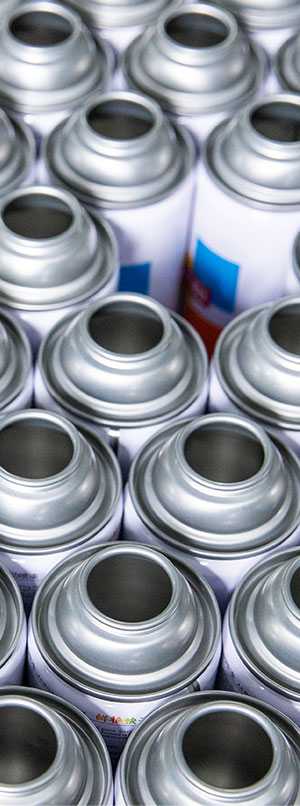
Our team at SANVO offers a heat-resistant acrylic aerosol formulation intended for surfaces operating from 400℃ to 600℃. The product uses acrylic resin, solvent, and pigment as its main components; its stated surface drying time is 4–5 minutes at 25℃ and RH60%, while full drying is specified as no more than 60 minutes under the same conditions. Available formats include 250g/400ml and 200g/350ml, with can dimensions of Φ65×158mm and Φ60×145mm.
Packaging specifications can matter more than they initially appear for distributors, maintenance suppliers, and purchasing teams. Net content and can dimensions affect storage arrangements, handling, transportation planning, and inventory organization. These practical details become especially relevant when a product is purchased repeatedly rather than for a single project.
Evaluating Real-World Application Requirements
A coating selection should begin with the component itself. Identify the substrate, estimate its normal operating temperature, consider whether heating occurs continuously or intermittently, and determine whether the surface is primarily functional, decorative, or both.
The surrounding environment may introduce additional considerations. Automotive components can face vibration and thermal cycling, while household heating equipment may combine high temperatures with frequent handling. Industrial maintenance projects may place greater emphasis on repeatability, application efficiency, and product availability.
For professionals comparing heat resistant metal spray paint, technical data provides a stronger foundation than appearance alone. A clearly stated temperature range can be compared against the application’s requirements, while drying information helps teams plan the coating workflow without confusing surface dryness with later drying stages.
Conclusion
High-temperature metal coating is ultimately a matter of matching formulation characteristics with actual service conditions. Thermal exposure, substrate preparation, adhesion, drying, application technique, and packaging specifications each contribute to the overall suitability of an aerosol coating. Looking at these elements together gives maintenance professionals and B2B purchasers a more useful framework for evaluating their options.At SANVO, we approach these requirements through product specifications that describe both intended temperature exposure and practical application characteristics. For users assessing heat resistant metal spray paint, details such as a 400℃–600℃ operating range, defined drying conditions, and available can formats can help turn a general coating search into a more informed technical decision.