Color does more than determine how a finished component looks; it can influence identification, visual coordination, maintenance planning, and the way a surface fits into its surrounding environment. The range of high heat spray paint colors available for a project should be considered alongside substrate, finish, exposure conditions, and application requirements.
A black coating on a machinery component serves a different visual purpose from a bright color used for equipment identification, while neither choice should be confused with the coating’s underlying thermal properties. At SANVO, we view color selection as one part of a broader coating decision, rather than treating appearance as an isolated specification.
Color Selection Starts With The Application
Industrial and maintenance projects often require more than one visual standard. Equipment may need to match an established corporate palette, refurbished parts may need to blend with existing surfaces, and different colors can help distinguish functional areas or components.
RAL and PANTONE systems provide useful references when consistency matters across production batches or suppliers. A defined color code gives buyers a clearer target than a description such as “dark blue” or “metallic grey,” especially when the finished products will be distributed across different locations.
At SANVO, we provide custom color options based on systems such as RAL and PANTONE. This approach allows a coating specification to address appearance requirements without assuming that every project needs the same standard shade.
Heat And Color Are Separate Performance Factors
Pigment choice can influence the visual stability of a coating, but color itself should not be treated as a direct measurement of heat resistance. A dark shade does not automatically tolerate higher temperatures, nor does a bright finish necessarily indicate weaker thermal performance.
The actual temperature experienced by the coated surface is more useful than its visual appearance. Components positioned near engines, heaters, exhaust systems, or industrial equipment may encounter different thermal loads depending on their distance from the source and operating cycle.
Consequently, high heat spray paint colors should be assessed through two separate questions: which appearance is required, and what temperature conditions will the coating experience? Keeping those questions distinct helps prevent color preference from becoming a substitute for technical evaluation.
Surface Material Shapes The Final Appearance
The same color can look noticeably different on metal, wood, plastic, glass, concrete, or wicker. Surface texture, porosity, reflectivity, and the condition of the underlying material all influence how light interacts with the finished film.
Preparation is especially important for color uniformity. Grease, dust, oxidation, old coatings, or uneven surfaces can create visible differences even if the spray application itself is consistent. A smooth and properly prepared substrate generally provides a more predictable visual foundation.
Application technique matters too. Spray distance, overlap, movement speed, and film thickness can alter color density and finish. For projects involving several parts, maintaining similar preparation and application conditions helps reduce unwanted variation between components.
Finish And Color Work Together
Color alone does not define the character of a coating. Gloss level, metallic effects, texture, and surface reflectivity can substantially change the way a shade appears under different lighting conditions. Two coatings with similar base colors may create very different visual results.
Metallic finishes provide a useful example. Reflective particles can create depth and a metal-like appearance, while smooth solid colors produce a more uniform visual field. The appropriate finish depends on whether the objective involves refurbishment, decoration, equipment coordination, or visual differentiation.
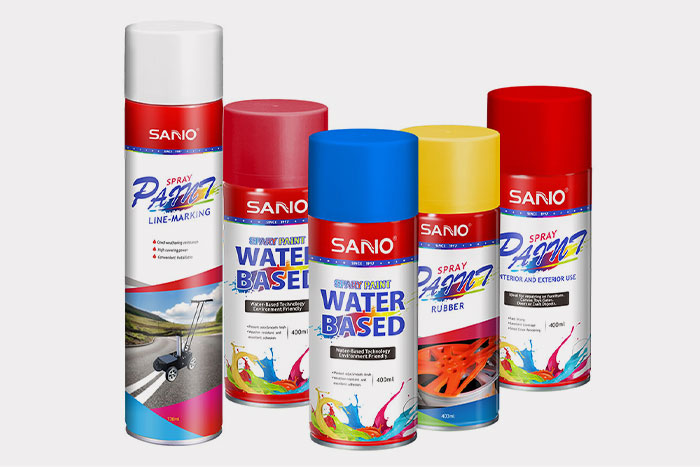
Our spray paint range includes multiple colors and finishes, with customization available for specific requirements. High heat spray paint colors should nevertheless be selected with the intended service environment in mind, since a visually suitable finish does not by itself establish thermal capability.
Practical Considerations For Custom Colors
Custom color development can be particularly useful when a business has established branding, product standards, or recurring refurbishment specifications. A defined color reference makes communication between purchasers, manufacturers, designers, and production teams more precise.
Water-based formulations may also be considered where odor and environmental conditions are important. SANVO offers innovative water-based spray paint options designed around lower odor, while its broader spray paint capabilities include indoor and outdoor applications across materials such as metal, wood, plastic, glass, wicker, and concrete.
Drying characteristics can affect workflow as well. SANVO spray paints are described as surface-drying in approximately five minutes, with full drying within 60 minutes under the stated product conditions. For commercial projects, those timings can be relevant when planning handling, recoating, packaging, or installation stages.
Conclusion
A well-defined color specification can simplify communication, improve visual consistency, and support practical identification across different applications, yet color should remain separate from technical performance criteria such as thermal resistance. We at SANVO approach spray paint customization by considering shade, finish, substrate, application environment, and project requirements together. Once those variables have been identified, high heat spray paint colors become easier to evaluate as part of a complete coating specification rather than as a simple choice between different shades.