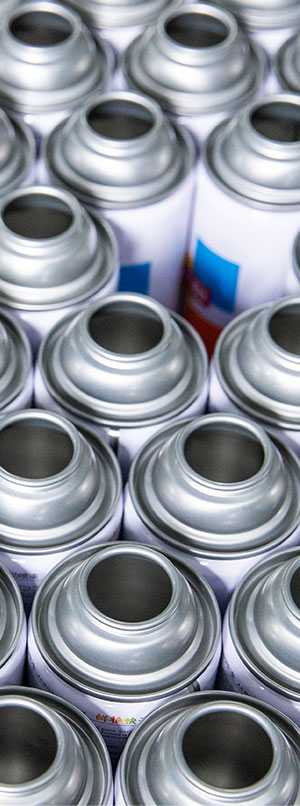
Furniture can lose its visual appeal long before it reaches the end of its useful life. Repainting is one practical way to refresh wooden cabinets, shelves, tables, and other pieces without replacing them. For buyers looking for a non-toxic furniture spray paint, however, the product’s formulation should be considered alongside surface compatibility, drying performance, finish quality, and application conditions.
What Should You Look for in Furniture Spray Paint?
Furniture can be made from different materials, including solid wood, engineered wood, metal, plastic, and composite components. A suitable coating therefore needs to provide dependable adhesion to the actual substrate rather than simply offering an attractive color.
Acrylic aerosol coatings can be useful for furniture because they can be applied in relatively thin, even layers. Spray application also makes it easier to reach edges, corners, decorative details, and irregular surfaces that may be more difficult to cover with a conventional brush or roller.
For commercial buyers, the coating’s technical documentation is equally important. Instead of relying only on a “non-toxic” description, check the composition, intended applications, drying conditions, and safety documentation before selecting a product.
What Does Non-Toxic Mean for Furniture Coatings?
“Non-toxic” should be understood as a product-specific formulation claim rather than a statement that the coating contains no chemicals or requires no precautions. Aerosol paints can contain resins, pigments, solvents, and propellants, so application should always follow the manufacturer’s instructions.
The acrylic spray paint from SANVO is described as acid-free, non-toxic, and pH balanced. Our published main components are acrylic resin, solvent, and pigment. The same specification identifies a solvent smell, which demonstrates why non-toxic and odor-free should not be treated as equivalent terms.
For furniture manufacturers, retailers, and refurbishment businesses, this distinction matters. A coating should be evaluated against the requirements of the intended application, supported by the relevant product documentation.
Why Is Acrylic Suitable for Furniture?
Acrylic coatings can provide a combination of appearance and practical application performance. The SANVO product is described as fast drying, with excellent coverage, good color rendering, and superior adhesion. It is recommended for decoration and appearance repair on wood, metal, and ABS substrates.
The broader product information also identifies furniture among its applications and lists surfaces including plastic, vinyl, fiberglass, concrete, laminate, and glass. This gives buyers flexibility when a furniture product contains several different materials.
Nevertheless, substrate testing remains advisable. Existing varnish, laminate, contamination, moisture, or an incompatible previous coating can affect adhesion. A small test area can help confirm the expected result before an entire furniture piece is refinished.
How Fast Does Furniture Spray Paint Dry?
Drying time is particularly important for furniture refurbishment because faster turnaround can reduce the time a piece spends out of service. The published specifications for this acrylic spray paint state a surface drying time of 4 to 5 minutes at 25°C and 60% relative humidity. Full drying is specified at no more than 60 minutes under those conditions.
These figures are reference conditions rather than guarantees for every workspace. Temperature, humidity, film thickness, airflow, and substrate can influence drying. Applying excessively heavy coats can also extend the time required for the coating to reach its intended condition.
For this reason, users should follow the stated application conditions and allow adequate drying before handling, stacking, or putting furniture back into regular service.
How Can You Get an Even Furniture Finish?
Furniture often has broad flat panels alongside narrow edges and detailed sections. Spray technique can therefore make a significant difference to the final appearance.
The manufacturer’s application guidance recommends cleaning the surface before painting, shaking the can vigorously for about 30 seconds, maintaining the proper spraying distance between the can and surface, and applying several thin coats. It also recommends using a mask and gloves during application.
Thin, consistent coats are generally easier to control than trying to achieve complete coverage in one heavy pass. Moving the can steadily across the surface can also help minimize localized buildup and uneven color.
Before applying the coating to a valuable or unfamiliar piece of furniture, a small test remains a sensible step.
Our Acrylic Spray Paint for Furniture Applications
We develop aerosol coating solutions for customers across markets such as hardware, vehicle repair, retail, and other applications. Our acrylic spray paint is also listed for furniture, making it relevant to businesses involved in refurbishment, decoration, and surface repair.
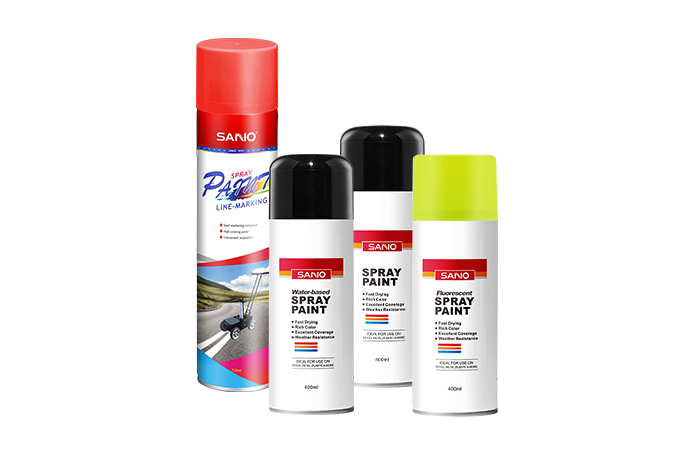
Our product offers more than 115 standard colors, with customized colors available according to customer requirements. The published specifications list 250 g/400 ml and 200 g/350 ml net-content options, providing choices for different purchasing and application needs.
For B2B customers, we also provide customization services covering factors such as color, packaging, and formulation. This can help distributors and furniture-related businesses develop aerosol products around their own market requirements.
What About Existing Furniture Finishes?
Furniture is rarely a completely bare substrate. Many pieces already have paint, varnish, laminate, or another factory-applied finish. The condition and compatibility of that existing surface should therefore be assessed before repainting.
The acrylic spray paint is described as suitable for application over factory-applied finishes and for touching up scratched parts.
However, this does not eliminate preparation. Loose or peeling material should not simply be covered with a new coating. Cleaning and preparing the surface can help provide a more suitable base and improve the consistency of the finished appearance.
Is a Non-Toxic Furniture Spray Paint Completely Risk-Free?
No. The non-toxic designation should not be interpreted as meaning that the aerosol can be sprayed without precautions. During application, the product is dispersed into the air, and the published formulation includes solvent. Users should therefore provide suitable ventilation and follow the product’s safety instructions.
The current SDS is also important when evaluating workplace handling requirements. The manufacturer’s safety documentation identifies the normal-color spray paint as a flammable aerosol, reinforcing the importance of following storage and application precautions rather than relying solely on the non-toxic product description.
How Should Businesses Select Furniture Spray Paint?
Start by identifying the furniture substrate and existing finish. Then determine the required color, gloss level, drying schedule, coverage, and expected use conditions.
For businesses purchasing in volume, consistency and customization can be just as important as the coating itself. Color matching, packaging specifications, documentation, and production capacity can affect whether an aerosol is practical for a commercial product line.
We offer customized aerosol services and support indoor and outdoor applications across materials such as wood, plastic, glass, wicker, and concrete. This provides B2B customers with an option to discuss a formulation according to a specific application instead of choosing only from standard products.
Choosing Non-Toxic Furniture Spray Paint
A non-toxic furniture spray paint should be selected by looking at the complete product rather than one label claim. Substrate compatibility, application technique, drying conditions, color selection, formulation, and safety documentation all influence whether a coating is appropriate for a furniture project.
Our acrylic spray paint is officially described as acid-free, non-toxic, and pH balanced, while its specifications identify acrylic resin, solvent, and pigment as the main components. It is recommended for wood and other substrates and offers more than 115 standard colors with customization available.
For furniture manufacturers, distributors, and refurbishment professionals, we recommend combining documented specifications with a small application test. This approach can help confirm adhesion, appearance, drying behavior, and overall suitability before moving to larger-scale use.