Toluene has long been used in paints and coatings because it can act as an effective organic solvent. It can help dissolve coating ingredients and influence application characteristics, but it also brings workplace exposure and regulatory considerations. Understanding the role of toluene in spray paint helps manufacturers, distributors, and professional users make more informed decisions when selecting aerosol coating products.
Why Is Toluene Used in Spray Paint?
Toluene is a colorless liquid with a distinctive odor and is classified as an aromatic hydrocarbon. NIOSH identifies paints and coatings among its established industrial uses, where toluene can function as a solvent. EPA documentation likewise describes its use in solvent-based coating formulations, either as part of the coating vehicle or as a thinner.
In spray paint, a solvent helps maintain the formulation in a workable liquid state before application. The solvent system can affect viscosity, spray behavior, drying, and film formation. Consequently, formulators need to consider the interaction between solvents, resins, pigments, and other ingredients rather than evaluating one chemical independently.
Toluene is not necessarily present in every aerosol coating. Spray paint manufacturers can use different solvent systems or develop water-based and other alternative formulations. This means the presence of toluene should always be confirmed from the specific product’s technical documentation.
What Are the Concerns About Toluene in Spray Paint?
The main concern with toluene in spray paint is potential exposure during manufacturing, application, and cleanup. OSHA explains that workers can encounter toluene through paints, varnishes, adhesives, rust preventives, and printing inks. Exposure can occur through inhalation, skin contact, eye contact, or accidental ingestion.
NIOSH also identifies potential effects associated with toluene exposure, including irritation and neurological symptoms such as headache, dizziness, and fatigue. The actual risk depends on factors including concentration, duration, and the work being performed.
This is why ventilation and appropriate workplace controls matter when spray coatings are applied. OSHA provides occupational exposure limits for airborne toluene, while NIOSH recommends lower exposure criteria. Businesses should follow the applicable requirements for their location and consult the current safety data sheet for the product being used.
How Does Toluene Affect Spray Paint Formulation?
Solvent selection can influence how easily a coating sprays and how quickly it dries. EPA notes that the amount of toluene required in a coating can vary according to factors such as temperature, humidity, and coating type. This demonstrates that changing solvent content can affect application performance rather than simply changing one ingredient on a fixed formula.
For aerosol manufacturers, formulation changes therefore require careful evaluation. Replacing toluene may affect viscosity, spray pattern, drying speed, surface appearance, adhesion, and compatibility with the resin system. A successful alternative should provide the required application characteristics while meeting the intended safety and regulatory objectives.
The right approach is usually formulation-specific. There is no universal replacement that will produce identical results across every spray paint category.
What Is Toluene-Free Spray Paint?
A toluene-free spray paint is formulated without toluene as an ingredient. However, toluene-free does not automatically mean solvent-free. A formulation may still contain other solvents selected to achieve the desired coating and aerosol performance.
This distinction is important for professional buyers. When evaluating a product, the term toluene-free should be considered alongside the complete ingredient information, safety data, application conditions, drying performance, and intended substrates.
A toluene-free formulation can be particularly relevant for businesses that have internal restricted-substance requirements or want to reduce reliance on particular solvents. Nevertheless, the overall chemical profile of the finished product should always be evaluated rather than focusing on a single ingredient.
Our Toluene-Free Spray Paint Solution
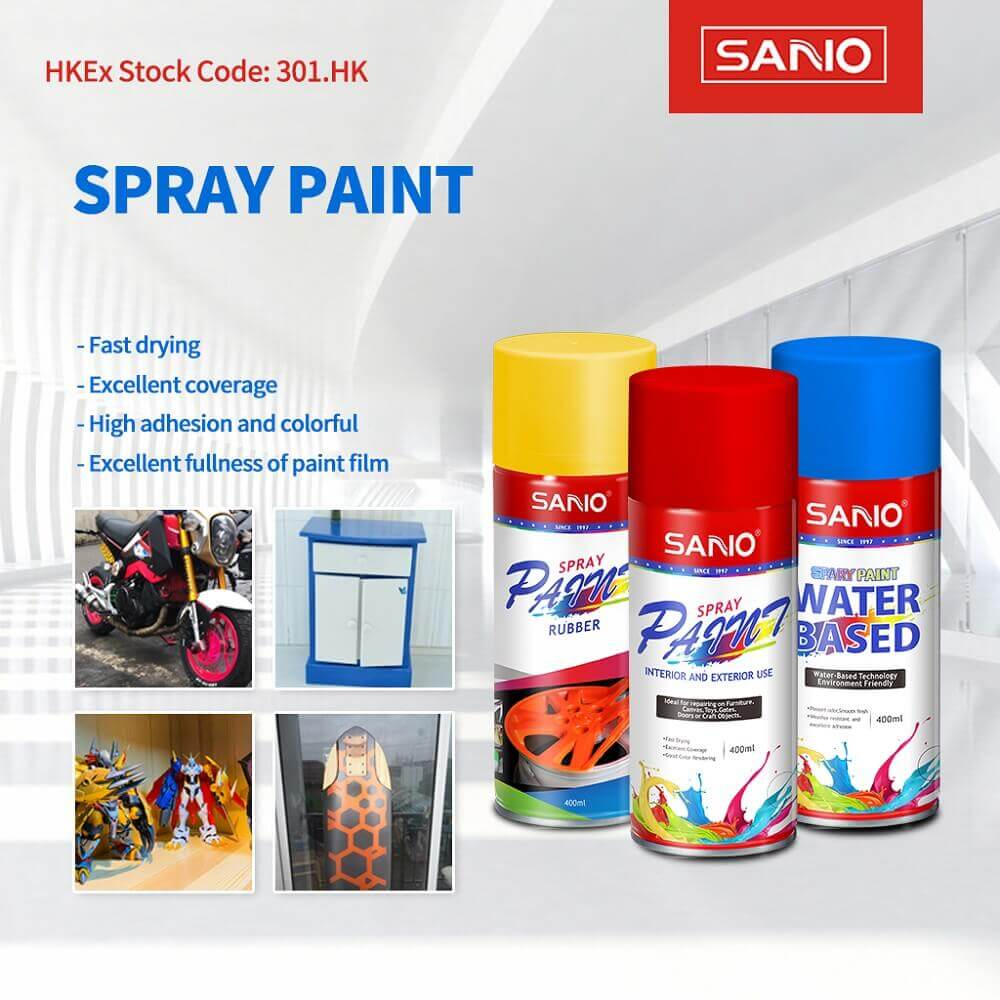
At SANVO, We develop aerosol coating solutions for customers in automotive, hardware, building-material, and related markets. Our toluene-free spray paint uses an eco-friendly resin, solvent, and toluene-free pigment system. It is designed for decoration and appearance repair on metal, wood, and ABS substrates, with more than 100 listed colors and customized colors available.
The product is designed for practical application while maintaining straightforward aerosol handling. Its published specifications list surface drying in 4 to 5 minutes and full drying within 60 minutes at 25°C and 60% relative humidity. Available formats include 250 g/400 ml and 200 g/350 ml.
The product page also identifies applications including tube surface protection, automotive appearance repainting, decoration, and wall art. These applications show how a toluene-free formulation can be positioned for both appearance-focused and practical coating work.
For business customers, formulation flexibility can also be important. We provide OEM and ODM capabilities, allowing customers to discuss product requirements and develop aerosol solutions around specific market or application needs.
How Should Buyers Evaluate Spray Paint?
When comparing aerosol paints, buyers should look beyond whether a product contains toluene. Important considerations include the substrate, color requirements, drying conditions, coverage, finish, storage requirements, and applicable chemical regulations.
The product’s SDS and technical data sheet should be reviewed before purchase and use. These documents provide a more reliable basis for evaluating chemical hazards and technical performance than product-category descriptions alone.
For manufacturers and distributors, pilot testing is also valuable when switching from a conventional formulation to a toluene-free alternative. Testing the actual product on the intended substrate can identify differences in spray behavior, drying, adhesion, and appearance before a larger commercial rollout.
Understanding Toluene in Spray Paint
Toluene in spray paint is primarily associated with its role as an organic solvent in solvent-based coating formulations. It can contribute to application and formulation performance, but its occupational exposure considerations mean that solvent selection deserves careful attention.
Toluene-free spray paint provides one formulation approach for customers seeking an alternative. The best choice depends on the required performance, substrate, application environment, and chemical specifications. By reviewing technical documentation and conducting appropriate application tests, buyers can select an aerosol coating that better matches both performance goals and workplace requirements.