Aerosol paint looks simple from the outside, yet the quality of the final coating depends on decisions made long before a can reaches a distributor’s warehouse. Resin selection, pigment dispersion, solvent balance, valve performance, container integrity, drying behavior, and substrate compatibility all influence how the product performs in actual use.
For businesses evaluating a spray paint manufacturer, understanding these technical and commercial factors makes it easier to distinguish a convenient aerosol product from a formulation developed around genuine market requirements. At SANVO, we approach acrylic spray paint from both sides of that equation, combining formulation knowledge with manufacturing and international business experience.
Formulation Begins With The Intended Application
Acrylic spray paint can serve very different purposes depending on the surface and environment. Metal parts may require strong adhesion and resistance to everyday handling, while wood, concrete, laminate, plastic, and glass present different surface characteristics. A useful formulation starts by identifying these conditions rather than assuming one composition will perform identically everywhere.
Drying speed is another important consideration, particularly for repair shops, workshops, retailers, and production environments where painted components may need to be handled relatively soon after application. Rapid surface drying can improve workflow, although the coating still needs sufficient time for the film to develop its intended physical properties.
Color and gloss expand the commercial possibilities of an aerosol range. Customers may require conventional finishes for maintenance work, distinctive shades for decoration, or customized colors for private-label products. Formulation flexibility becomes especially valuable when a manufacturer serves several industries with different aesthetic and functional expectations.
Why The Aerosol Container Matters
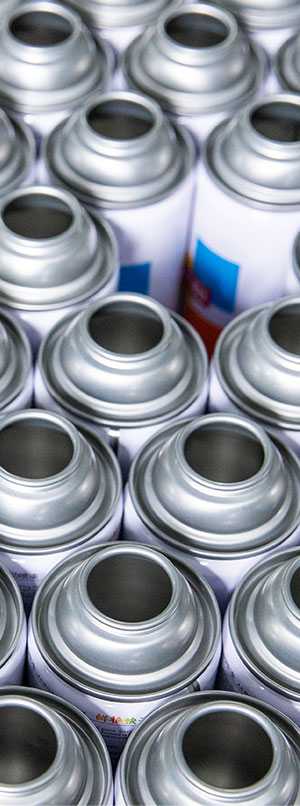
The container is not merely packaging; it forms part of the product’s performance system. An appropriate can must hold the formulation under pressure while protecting its contents during storage, transportation, and normal handling. The valve and actuator also influence how consistently the material is released during application.
An airtight seal helps protect the formulation from leakage and unnecessary exposure to the surrounding environment. For businesses handling substantial inventories, packaging reliability has practical consequences because damaged or compromised containers can create product loss, logistics problems, and additional handling requirements.
Container dimensions, labeling, nozzle selection, and packaging configuration may also vary according to the target market. OEM projects often involve more than putting a different logo on an existing product. Packaging specifications, regulatory requirements, accessories, and formula characteristics may all need to be discussed before production begins.
Evaluating Manufacturing Quality Beyond The Paint
Quality control should cover the complete production chain rather than focus solely on the appearance of the finished coating. Raw material consistency, filling accuracy, pressure characteristics, spray behavior, color matching, drying performance, and package integrity can all affect the user’s experience.
Production capacity becomes relevant once a product moves from testing into commercial distribution. A formula that performs well at laboratory scale still needs a controlled manufacturing process capable of reproducing its characteristics across larger batches. Stable procedures and appropriate inspection points help reduce variation between production runs.
Matching Products With Market Expectations
Different markets place different demands on acrylic aerosols. Automotive repair businesses may value application convenience and color matching, hardware retailers may require a broad range of consumer-friendly options, while construction or decoration companies can have more specialized surface and finish requirements.
Regulatory considerations can also influence formulation and packaging decisions. Requirements may differ between countries or regions, making documentation, ingredient selection, labeling, and shipping arrangements important parts of product development. A commercially viable aerosol needs to fit its intended market as well as its intended application.
Building A Flexible OEM And ODM Partnership
OEM production is particularly useful when a company already has a defined product concept, brand identity, or packaging direction. The manufacturing discussion may cover private labeling, can specifications, color requirements, accessories, regulatory compliance requirements, and order volumes. Clear technical communication at this stage reduces misunderstandings later in the production process.
ODM projects involve a different starting point. Some customers know the market problem they want to address but do not have a finished formula or product specification. In such cases, R&D collaboration can help translate an initial concept into a practical aerosol solution while considering application requirements, materials, packaging, and production feasibility.
We at SANVO support international customers through manufacturing and service resources developed around cross-border business. Our international trade department has been established for 20 years and has over 30+ members with experience in customer service for various regions. Serving over 500 customers has enabled our team to respond quickly to diverse industry concerns.
Conclusion
Acrylic aerosol manufacturing involves a network of technical decisions that users may never see: the chemistry must suit the application, the container must protect the formulation, production needs consistent controls, and the finished product has to make sense within its target market. Businesses comparing a spray paint manufacturer can gain a clearer perspective by examining these elements together instead of judging the product solely by color, price, or drying speed. We at SANVO bring formulation, manufacturing, OEM/ODM development, and international customer service into one working process, helping commercial partners turn practical coating requirements into products that fit their intended markets.