When a vehicle starts idling roughly, losing power, or consuming more fuel than usual, the culprit is often a dirty fuel system. A quality fuel system cleaner can make a measurable difference by dissolving carbon deposits and restoring engine efficiency. But with so many products on the market, how do buyers know which one actually works? This guide breaks down the technical criteria that separate effective cleaners from ineffective ones.
What Does a Fuel System Cleaner Actually Do?
Carbon deposits, gum, and varnish gradually accumulate inside the fuel system during normal combustion, restricting fuel flow and reducing engine performance over time. A fuel system cleaner is a chemical product added directly to the fuel tank to remove these deposits and restore efficient engine operation.
Components a Fuel System Cleaner Targets
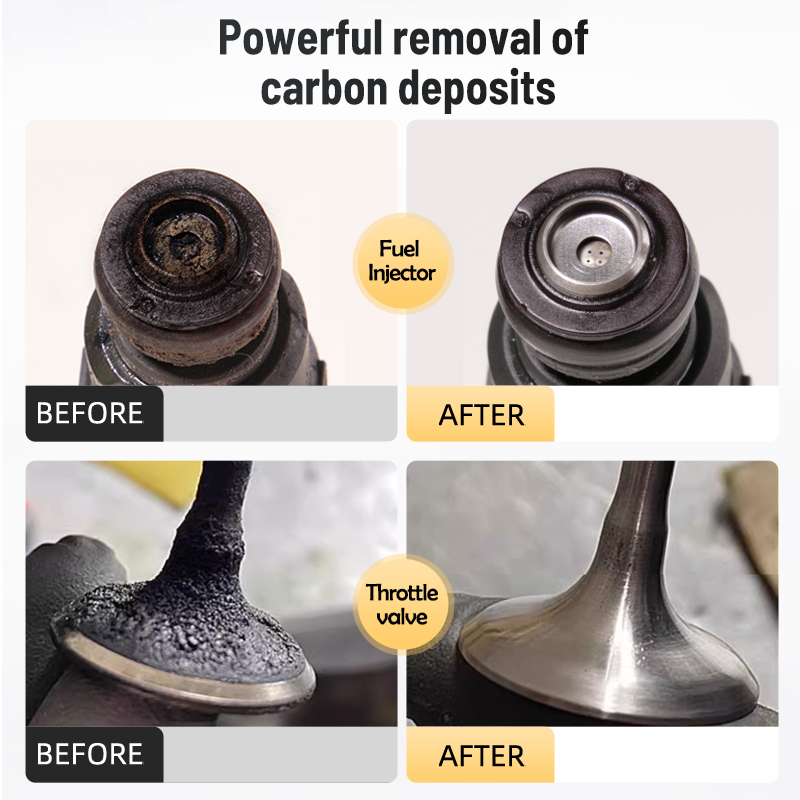
- Fuel injectors: Carbon buildup restricts the spray pattern, disrupting the air-to-fuel ratio and causing uneven combustion
- Intake valves: Deposits on valve surfaces reduce airflow into the combustion chamber
- Combustion chambers: Residue inside the chamber lowers compression and increases the chance of engine knocking
- Fuel tank and fuel lines: Gum and varnish deposits restrict fuel flow and can clog filters
When these components are clean, fuel burns more completely, restoring power output and fuel economy to levels closer to the factory specification.
Key Technical Criteria for a High-Quality Fuel System Cleaner
Not all fuel system cleaners are formulated equally.
1. Active Cleaning Chemistry
The most effective cleaners utilize a synergistic dual-action chemistry (Detergents & Solvents). The core consists of advanced detergent polymers—such as Polyetheramine (PEA)—which retain thermal stability in the combustion chamber and disperse hard carbon deposits. This is supported by high-purity carrier solvents, including precision-buffered isopropanol and dimethyl carbonate, selected for their immediate solvent action and residue-free evaporation during fuel transition.
2. Compatibility with Fuel System Materials
A professional-grade cleaner must maintain absolute chemical inertness toward all fuel-system metallurgy and polymers. Because aggressive raw solvents can compromise standard nitrile rubber (NBR) seals or plastic fuel lines over time, high-quality formulations incorporate specific chemical inhibitors. This ensures the fluid remains completely safe for modern fuel injectors, high-pressure lines, and sensitive oxygen sensors under fluctuating fuel rail pressures.
3. Clean-Burning and Thermal Stability
Beyond dissolving deposits in the fuel tank, the formula must possess exceptional clean-burning characteristics under high-temperature, high-compression engine environments. It must volatilize and combust seamlessly without generating secondary ash or sticky varnishes. This residue-free performance ensures that downstream emission control components, such as catalytic converters and particulate filters, are protected from fouling.
Signs Your Fuel System Needs Cleaning
Understanding these technical criteria is essential not only for product evaluation, but also for recognizing real-world engine conditions that indicate when a fuel system cleaner is needed. Watch for these indicators:
- Rough or unstable idle: The engine shakes or fluctuates at stoplights, often caused by clogged injectors disrupting the fuel spray pattern
- Weak acceleration or hesitation: Reduced power when pressing the accelerator suggests insufficient or uneven fuel delivery
- Increased fuel consumption: Refueling more often over the same driving distance typically signals inefficient combustion caused by deposit buildup
- Engine misfires: Incomplete combustion in one or more cylinders, often linked to fouled injectors or dirty combustion chambers
- Difficulty starting: Extended cranking time, particularly after the vehicle has sat unused for a period
Most automotive professionals recommend using a fuel system cleaner every 10,000 to 15,000 miles as part of routine maintenance, or as part of a treatment cycle when symptoms appear.
Choosing the Right Product for the Application
Different vehicles and use cases call for different formulation priorities.
| Vehicle Type | Priority |
| High-mileage daily drivers | Strong carbon removal and injector cleaning |
| Fleet and commercial vehicles | Consistent performance, fuel economy improvement |
| Vehicles stored long-term | Gum and varnish prevention |
| Turbocharged or high-performance engines | Knock reduction, combustion chamber cleaning |
| Short-trip urban drivers | Deposit prevention from incomplete combustion cycles |
SANVO Fuel System Cleaner: A Technically Grounded Choice
For buyers seeking a product backed by verified chemistry and professional formulation, SANVO offers a fuel system cleaner developed specifically to address the core causes of engine performance degradation.
The SANVO Fuel System Cleaner is formulated with acetone, isopropanol, and dimethyl carbonate, three active solvents chosen for their cleaning power, fast volatility, and compatibility with modern fuel system materials.
Product Features
- Rapid carbon deposit removal: Rapidly removes gum and carbon buildup from fuel injection nozzles, intake valves, piston crowns, and combustion chambers
- Engine power restoration: Directly improves power performance by restoring clean fuel delivery and efficient combustion
- Fuel economy improvement: Cleaner injectors and chambers support more complete combustion, reducing fuel waste per cycle
- Reduced emissions: Cleaner combustion produces fewer harmful exhaust gases, supporting compliance with emissions standards
- Fuel system compatibility: Formulated for compatibility with key fuel system components such as fuel injectors and oxygen sensors under normal operating conditions.
SANVO brings over 30 years of fine chemical manufacturing experience and more than 50 registered patents to its automotive product line. The company operates seven professional manufacturing bases and holds complete quality certifications, making it a reliable supply partner for international buyers.

Final Thoughts

When evaluating what is the best fuel system cleaner for a specific application, the answer always comes back to chemistry, compatibility, and consistency. A product formulated with proven active solvents, tested against key performance benchmarks, and packaged for practical use at scale represents the standard worth looking for.
Whether maintaining a single vehicle or sourcing for a wholesale distribution network, choosing a cleaner built on sound technical foundations protects both engine health and long-term operating costs.