Paint selection has become more detailed than simply choosing a color and finish. For manufacturers, distributors, repair businesses, and retailers, the formulation behind a coating can influence product positioning, market suitability, and customer expectations. This is one reason lead-free spray paint has become an important option for businesses seeking alternatives to coatings made with lead-containing pigments.
Understanding what lead-free means, where these coatings can be used, and which specifications deserve attention can help buyers make better sourcing decisions. The goal is not simply to find a product carrying a lead-free label, but to select a coating that also fits the required application and performance conditions.

Why Choose Lead-Free Spray Paint?
Lead has historically been used in certain paints and pigments, but concerns surrounding exposure have resulted in restrictions and tighter controls in many markets. In the United States, federal rules limit lead in paint and similar surface coatings for regulated consumer products to 0.009%, or 90 parts per million.
For today’s coating buyers, this makes formulation transparency increasingly valuable. A lead-free formulation can provide an alternative for businesses that want to reduce concerns associated with lead-containing pigments while maintaining the convenience of an aerosol application.
However, lead-free should not be confused with universally safe or hazard-free. Aerosol coatings still need to be handled according to their product instructions and safety documentation. Buyers should consider the complete formulation, intended use, and regulatory requirements of their target market.
Where Can Lead-Free Coatings Be Useful?
One advantage of spray paint is its flexibility across appearance-focused applications. Instead of requiring specialized equipment for every small repair or decorative task, an aerosol can deliver a ready-to-use coating in a portable format.
A suitable lead-free formulation can be useful for metal, plastic, and wood surfaces. These substrates appear across automotive components, hardware products, decorative objects, construction materials, and general repair work. The actual suitability, however, should always be confirmed against the manufacturer’s recommended applications.
This versatility is particularly relevant for B2B buyers. A distributor may want one product that can serve several customer groups, while a repair shop may need a coating that supports quick appearance restoration without changing its existing application process.
What Should Buyers Check Before Purchasing?
The first consideration should be the formulation. A product page should clearly identify whether lead-free pigments or other relevant materials are used. This gives buyers a more concrete basis for evaluating the coating than a general environmental statement.
The next consideration is application compatibility. A coating designed for decoration may have different performance expectations from a product intended for heavy-duty industrial protection. Buyers should therefore check the recommended substrates and applications before placing an order.
Drying characteristics also deserve attention. Faster drying can be valuable in repair and decorative workflows because it can reduce waiting time between application stages. Nevertheless, published drying times are normally based on specified temperature and humidity conditions, so actual results can vary.
How We Approach Lead-Free Spray Paint
At SANVO, we develop fine chemical products for the automotive, hardware, and building material industries. Our business focuses strongly on B2B cooperation, including OEM, ODM, customization, wholesale, and distributor services. We also operate multiple manufacturing bases and maintain dedicated quality-control capabilities for raw materials and finished products.
Our Lead-Free Spray Paint uses eco-friendly resin, solvent, and lead-free pigment as its listed main components. It is designed for decoration and appearance repair on metal, wood, and ABS substrates, giving customers an option for projects where a lead-free formulation is preferred.
The product offers more than 100 colors, with customized colors available according to requirements. Its listed features include fast drying, excellent coverage, fresh colors, and a lead-free formulation. These characteristics make the product relevant to businesses that need both formulation considerations and practical appearance-finishing capabilities.
Product Specifications at a Glance
For purchasing decisions, specific technical data provides a clearer picture than general product descriptions. The product’s surface drying time is listed as 4–5 minutes at 25°C and 60% relative humidity. Full drying is specified as no more than 60 minutes under the same conditions.
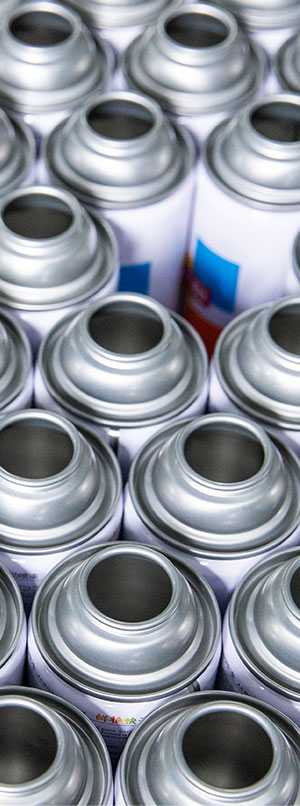
The available net contents are 250 g/400 ml and 200 g/350 ml. The listed can sizes are Φ65 × 158 mm and Φ60 × 145 mm, while the stated shelf life is three years when stored at room temperature. These details can help distributors plan inventory, packaging, and storage requirements.
The product page also lists a solvent smell. This is an important reminder that lead-free does not mean odor-free or that normal aerosol safety precautions can be ignored. Users should follow the relevant product and safety instructions during application.
Typical Applications for Lead-Free Spray Paint
The recommended uses include decoration and appearance repair on metal, wood, and ABS substrates. Listed applications include automotive appearance repainting, decoration, wall art, and anti-rust surface protection on tubes.
These applications cover several commercial scenarios. Automotive businesses can use suitable coatings for appearance-related work, while hardware and building-material distributors may supply aerosols for maintenance and decorative projects. Retailers can also benefit from a broad color range when serving customers with different visual requirements.
For businesses developing their own product lines, customization can provide another advantage. Color requirements can vary between markets, brands, and specific projects, so the ability to discuss customized options can be useful when building a differentiated aerosol portfolio.
Making Lead-Free Selection More Practical
Choosing lead-free spray paint should involve more than confirming the absence of lead. Buyers should evaluate substrate compatibility, color requirements, drying behavior, packaging, shelf life, application conditions, and supporting documentation together.
Regulatory requirements should also be considered according to the intended market and end use. For regulated products, businesses may need appropriate testing or documentation to demonstrate compliance rather than relying solely on a supplier’s general product description. The CPSC provides specific guidance concerning lead limits and compliance responsibilities for applicable products.
A well-documented product gives commercial buyers a stronger foundation for making sourcing decisions. It also helps distributors communicate product characteristics more accurately to their own customers.
As demand for more carefully formulated coatings continues to develop, lead-free products can give businesses another way to align formulation choices with market expectations. By reviewing verified specifications and matching them to the intended application, buyers can select a spray coating that combines practical performance with a more considered approach to material selection.