Spray paint is convenient for decoration, repair, and maintenance, but direct skin contact should always be avoided. If you are wondering, is spray paint toxic to the skin? the answer depends on the specific formulation and the type and duration of exposure. Paint can contain solvents, pigments, resins, and other ingredients that may irritate skin or cause other adverse effects when handled improperly.
Is Spray Paint Toxic to the Skin?
There is no single answer for every spray paint because formulations differ considerably. Some products contain solvents that can irritate or dry the skin, while other ingredients may cause sensitization in susceptible individuals. OSHA notes that contact with paints and paint solvents can present risks including irritation, allergic reactions, chemical burns, and absorption through the skin.
The level of risk depends on factors such as the chemical composition, concentration, amount of contact, exposure duration, and condition of the skin. Damaged or irritated skin can absorb some chemicals more readily than intact skin, according to OSHA’s technical guidance on dermal exposure.
Therefore, a spray paint should never be judged solely by its color, finish, or intended application. The product’s safety data sheet is the appropriate source for identifying relevant hazards and recommended protective measures.
Why Can Spray Paint Irritate Skin?
Many coatings contain organic solvents that help keep the formulation workable during application. Some solvents can remove natural oils from the skin, causing dryness or irritation after contact. OSHA explains that prolonged contact with solvents can defat the skin and contribute to dermatitis.
Spray application creates another consideration. Instead of contacting the skin only as a liquid, aerosol paint can settle on exposed hands, arms, or other areas as droplets or fine particles. OSHA recommends considering skin contact and absorption hazards when selecting protective equipment for painting operations.
Repeated exposure can also be more problematic than an isolated brief contact. People who spray coatings regularly should therefore consider engineering controls, work practices, and appropriate protective equipment rather than relying on occasional hand washing.
Does a Non-Toxic Label Mean Skin Contact Is Safe?
Not necessarily. A product described as non-toxic should still be handled according to its label and safety documentation. The term does not mean that users should deliberately apply the coating to their skin or allow repeated occupational exposure.
For example, SANVO’s acrylic spray paint is officially described as acid-free, non-toxic, and pH balanced. However, the same product information identifies acrylic resin, solvent, and pigment as its main components and notes a solvent smell.
This illustrates why a product description and safe-handling instructions should be considered together. A particular formulation may have favorable characteristics while still requiring users to prevent unnecessary skin contact during spraying.
What Should You Do If Spray Paint Gets on Your Skin?
If wet spray paint contacts the skin, the priority is to remove the contamination rather than allowing it to remain on the skin. The appropriate first-aid procedure depends on the formulation, so the product’s SDS should be consulted.
For chemical products, OSHA emphasizes preventing dermal exposure through suitable work practices and protective equipment. Where contact cannot be adequately avoided, chemical-protective gloves, aprons, or other protective clothing may be appropriate depending on the material and task.
Do not use an aggressive solvent on your skin simply because it dissolves the paint effectively. Some solvents can further damage the skin or increase chemical absorption. Follow the product-specific first-aid instructions and seek medical advice if significant irritation or other symptoms develop.
How Can Users Reduce Skin Exposure?
The simplest approach is to prevent contact before spraying begins. Wear suitable gloves and protective clothing when the product instructions or workplace hazard assessment calls for them. OSHA recommends selecting PPE based on the chemicals being used and the specific painting operation.
Good application technique also matters. Avoid spraying toward yourself, keep unnecessary body parts away from the spray pattern, and maintain appropriate ventilation. Do not eat, drink, or smoke while handling chemical products, particularly before washing exposed hands.
For professional operations, PPE should be selected according to the actual formulation. Different gloves provide different levels of resistance to solvents, so simply choosing any glove may not provide adequate protection.
What About Acrylic Spray Paint?
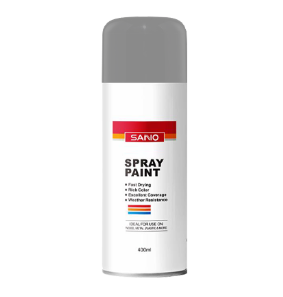
Acrylic spray paint is commonly used for decorative and repair applications on materials such as metal, wood, plastic, and ABS. Our acrylic spray paint is designed for these applications and features an adjustable easy-press nozzle and wide spray pattern for applying smooth, even coats.
The published specifications state that the product is available in 400 ml content and offers more than 115 standard colors, with customized colors available. The product is positioned for decoration and appearance repair rather than direct application to human skin.
When applying an aerosol coating, users should therefore treat the product as an industrial or household chemical rather than as a substance intended for skin contact. The coating’s intended substrate and application method should always be respected.
Choosing Spray Paint for Professional Applications
For distributors, retailers, automotive businesses, and other professional buyers, skin exposure is only one part of product evaluation. Technical performance, substrate compatibility, drying time, formulation, packaging, and safety documentation should also be reviewed.
Our acrylic spray paint is marketed for applications involving metal, vinyl, plastic, fiberglass, and other surfaces, with fast drying, good coverage, color rendering, and adhesion among its stated features.
SANVO also support customized aerosol solutions for business customers. This can be useful when a distributor or manufacturer needs particular colors, packaging, or formulation characteristics for a specific market. Regardless of customization, the finished product should be evaluated through appropriate technical and safety documentation before commercial use.
When Should You Seek Medical Attention?
Minor accidental contact should be handled according to the product’s first-aid instructions. However, persistent redness, burning, swelling, blistering, severe irritation, or other unusual symptoms should not be ignored.
People with pre-existing skin damage may also be more vulnerable to chemical irritation or absorption. OSHA notes that damaged skin can allow chemicals to penetrate more readily than intact skin.
If a substantial exposure occurs, consult the product SDS and seek appropriate medical assistance. Providing healthcare professionals with the product name and safety documentation can help them understand the substances involved.
Final Answer: Is Spray Paint Toxic to the Skin?
So, is spray paint toxic to the skin? Spray paint should not be considered safe for direct or prolonged skin contact. Depending on its formulation, contact can cause irritation, dermatitis, allergic reactions, or chemical absorption. The actual hazard varies between products, so the SDS is essential for determining the appropriate precautions.
For users of acrylic aerosol coatings, the best practice is straightforward: prevent skin contact, use suitable protective equipment when required, maintain adequate ventilation, and follow the manufacturer’s instructions. Treating spray paint as a chemical coating rather than an ordinary household liquid provides a safer approach to both occasional projects and regular professional use.