If you work with solvents, coatings, adhesives, or industrial chemicals, you may have encountered xylene and wondered, is xylene aromatic? The answer is yes. Xylene is an aromatic hydrocarbon because its molecular structure contains a benzene ring with two methyl groups attached. This structure gives xylene chemical characteristics that make it useful as a solvent in paints, coatings, rubber products, and other industrial formulations.
Is Xylene Aromatic? The Chemistry Behind the Answer
Xylene, also called dimethylbenzene, has the molecular formula C8H10. Its structure consists of a benzene ring substituted with two methyl groups. This arrangement places xylene in the aromatic hydrocarbon family, alongside compounds such as benzene and toluene.
There are three principal xylene isomers: ortho-xylene, meta-xylene, and para-xylene. They have the same molecular formula but differ in the positions of their two methyl groups on the benzene ring. These structural differences can affect their physical properties and industrial applications.
Therefore, is xylene aromatic? Yes, and this is a chemical classification based on molecular structure rather than simply its odor or petroleum origin. Commercial xylene can also contain mixtures of the three isomers and small amounts of other hydrocarbons.
What Makes a Hydrocarbon Aromatic?
The word aromatic can sometimes cause confusion because it sounds related to fragrance. In chemistry, however, aromatic describes a particular type of molecular structure. Aromatic compounds contain a stabilized ring system with delocalized electrons. Benzene is the classic example of an aromatic compound.
Xylene retains this aromatic ring while adding two methyl groups. The resulting molecule remains an aromatic hydrocarbon. This structure also helps explain why xylene has solvent properties that are valuable in industrial applications.
Xylene occurs naturally in petroleum and coal tar, and industrial production commonly obtains it from petroleum. It is also widely used as a solvent in paints, coatings, rubber products, and other formulations.
Why Is Aromatic Xylene Used in Coatings?
One important reason xylene appears in coating formulations is its solvent function. Solvents can help dissolve or disperse other components, allowing a formulation to be applied in a suitable liquid form. As the coating dries, volatile solvent components can evaporate while the remaining formulation forms the intended film.
This makes xylene relevant to paints, varnishes, adhesives, and rubber-related products. NIOSH identifies painters and furniture refinishers among workers who may encounter xylene through products such as paint thinners, solvents, lacquers, and paint removers.
However, the presence of xylene does not mean that every product containing it should simply be described as a xylene product. Finished coatings contain multiple ingredients, and their performance depends on the complete formulation rather than one solvent alone.
Xylene in Rubber Spray Paint
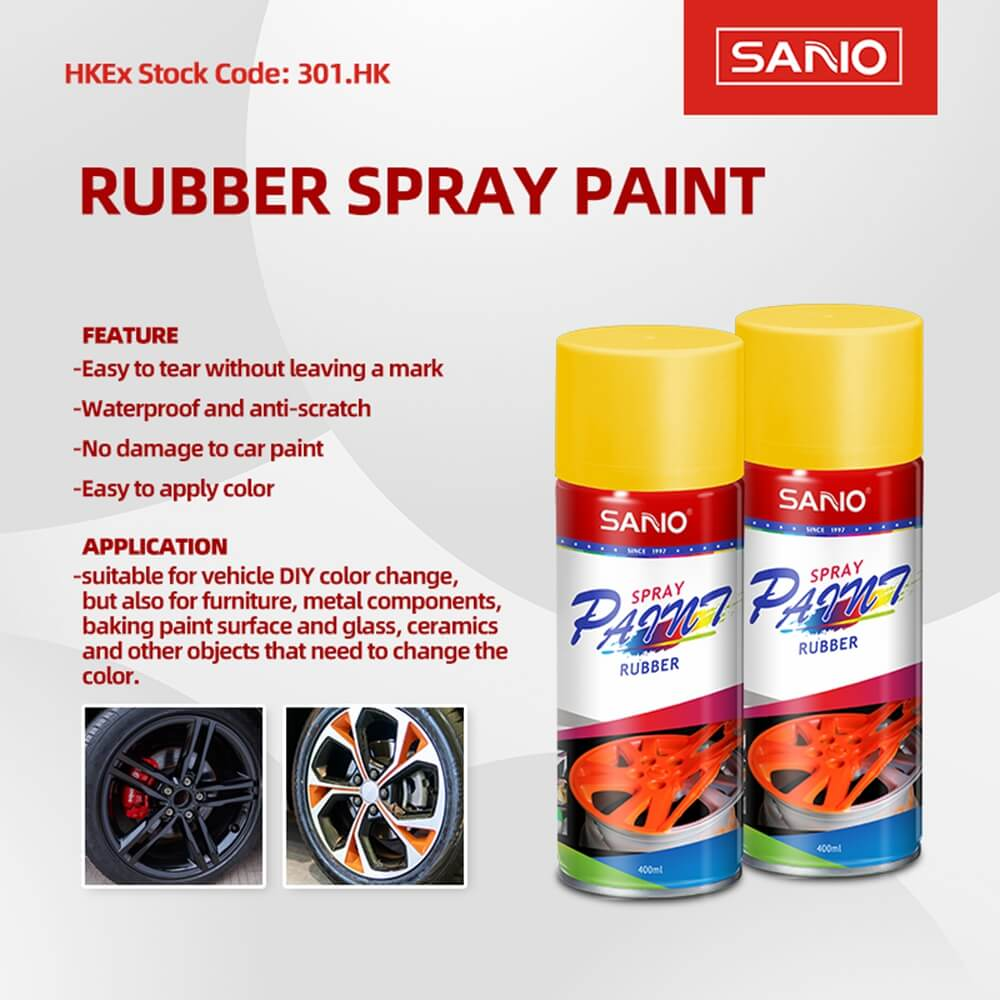
SANVO Rubber Spray Paint provides a practical example of how xylene can be incorporated into an aerosol coating. The official product page lists styrene-butadiene copolymer resin, pigments or powders, solvent oil, ethyl acetate, xylene, and DME among its main ingredients.
The product is formulated as a natural-drying rubber coating agent for changing the color of vehicle bodies, wheel hubs, vehicle interiors, furniture, metal components, painted surfaces, glass, ceramics, and other suitable objects. It is supplied in a 400 ml aerosol format with a 12-piece carton package.
Its published specifications include a surface drying time of 10 minutes and a full drying time of one hour. The product has a spray rate of at least 96%, while the specified construction temperature is 15 to 40°C. The listed density at 20°C is 0.92 to 1.05 g/cm³.
These specifications demonstrate the importance of evaluating the complete product. Xylene contributes to the formulation, but the resin, pigments, other solvents, propellant, and application conditions also influence the coating’s final characteristics.
Does Aromatic Mean the Product Smells Strong?
Aromatic compounds can have characteristic odors, and xylene is commonly described as having a sweet or aromatic odor. However, the chemical meaning of aromatic is determined by molecular structure, not smell. A chemical does not become aromatic simply because it has a noticeable odor.
This distinction is particularly useful when evaluating industrial products. Odor can provide a sensory indication that volatile chemicals are present, but it should not be used as a substitute for reading the ingredient list, technical data sheet, or safety data sheet.
Safety Considerations for Xylene-Containing Products
Xylene is a flammable liquid, and NIOSH notes that exposure can irritate the eyes, nose, skin, and throat. Appropriate workplace controls are therefore important when handling xylene-containing formulations.
The Rubber Spray Paint SDS also identifies fire sources, high temperature, and direct sunlight as conditions to avoid. It states that the product should be kept away from incompatible materials such as oxidants, strong acids, and strong bases.
When using an aerosol coating, users should follow the current product label and SDS, maintain appropriate ventilation, and keep the product away from ignition sources. Professional buyers should also consider local requirements for storage, transportation, and workplace chemical handling.
Our Approach to Chemical Coatings
At SANVO, we develop fine chemical products for automotive, hardware, and building-material applications. We focus on providing coating solutions with clear technical information so users and business customers can evaluate products according to their intended applications. Our product range includes spray paints, rubber coatings, adhesives, sealants, and other chemical solutions.
For buyers evaluating rubber spray paint, understanding the role of each major component can make product comparisons more meaningful. Instead of judging a formulation solely because it contains an aromatic solvent, it is better to examine its resin system, application range, drying performance, coverage, and documented safety information.
Final Answer: Is Xylene Aromatic?
So, is xylene aromatic? Yes. Xylene is an aromatic hydrocarbon with a benzene ring and two methyl groups. Its three principal isomers are ortho-xylene, meta-xylene, and para-xylene, and commercial xylene may contain mixtures of these compounds.
Its aromatic structure helps explain its widespread use as an industrial solvent, including in paints, coatings, and rubber-related products. In a finished product such as rubber spray paint, however, xylene is only one part of a larger formulation. Reviewing the complete specifications and SDS provides a more accurate understanding of the product’s performance and safe handling requirements.