Heat can be an overlooked factor in surface-finishing decisions, particularly when a painted component sits near machinery, vehicles, lighting equipment, or other heat-producing systems. Understanding spray paint heat tolerances requires more than looking at a single temperature figure because exposure time, substrate, film thickness, and environmental conditions can all influence coating behavior. In our work at SANVO, we treat temperature as one part of a wider application assessment, separating ordinary decorative requirements from situations in which a surface must repeatedly withstand elevated temperatures.
Why Temperature Exposure Varies Between Applications
Two painted surfaces can experience very different thermal conditions even if they are located within the same facility. One may remain close to ambient temperature, while another receives intermittent heat from engines, machinery, pipes, lamps, or production equipment. The distance from the heat source and the duration of exposure can change the actual surface temperature considerably.
Thermal cycling introduces another consideration. A coating may heat during operation, cool after shutdown, and repeat the same cycle many times. Expansion and contraction of the substrate can place mechanical stress on the paint film, particularly if the surface and coating respond differently to temperature changes.
For that reason, spray paint heat tolerances should be considered in relation to the complete operating pattern. Peak temperature alone may provide an incomplete picture; continuous exposure, short-term spikes, and repeated heating cycles can create different demands on the finished coating.
The Substrate Changes The Thermal Equation
Metal, plastic, and wood do not react to heat in exactly the same way. Metal generally transfers heat quickly, while plastics can have different dimensional and thermal characteristics. Wood may respond to temperature and moisture changes through movement within the material itself.
Surface condition matters alongside material type. Oil, dust, oxidation, loose particles, and old coating residues can interfere with adhesion before heat even becomes a factor. A technically suitable paint cannot compensate for every problem created by an unsuitable or poorly prepared substrate.
The relationship between the coating and the material underneath it deserves attention during product selection. Rather than asking only whether a paint can tolerate heat, users should also consider whether the formulation is intended for the substrate and application involved.
Heat Tolerance Is Not The Same As Overall Durability
Temperature resistance represents one performance characteristic, whereas durability can involve many others. Abrasion, moisture, cleaning agents, sunlight, chemicals, and mechanical contact may affect a coating independently of heat. A surface exposed to moderate temperatures but heavy physical wear can require a different coating strategy from a hot but protected component.
Application quality also affects the finished film. Uneven spray distance, inconsistent movement, excessive buildup, or insufficient coverage can produce variations that become more apparent under demanding conditions. Controlled preparation and application provide a more reliable basis for evaluating coating behavior.
The phrase spray paint heat tolerances should consequently be interpreted as a temperature-related specification rather than a universal statement about service life. Technical documentation should be reviewed alongside the environmental conditions expected after application.
How Heat-Resistant Coatings Differ From Decorative Formulations
Not every acrylic aerosol coating is intended for high-temperature service. Some formulations focus primarily on appearance repair, decorative finishing, or creating a particular visual effect. Their performance criteria may differ substantially from coatings developed specifically for heated components.
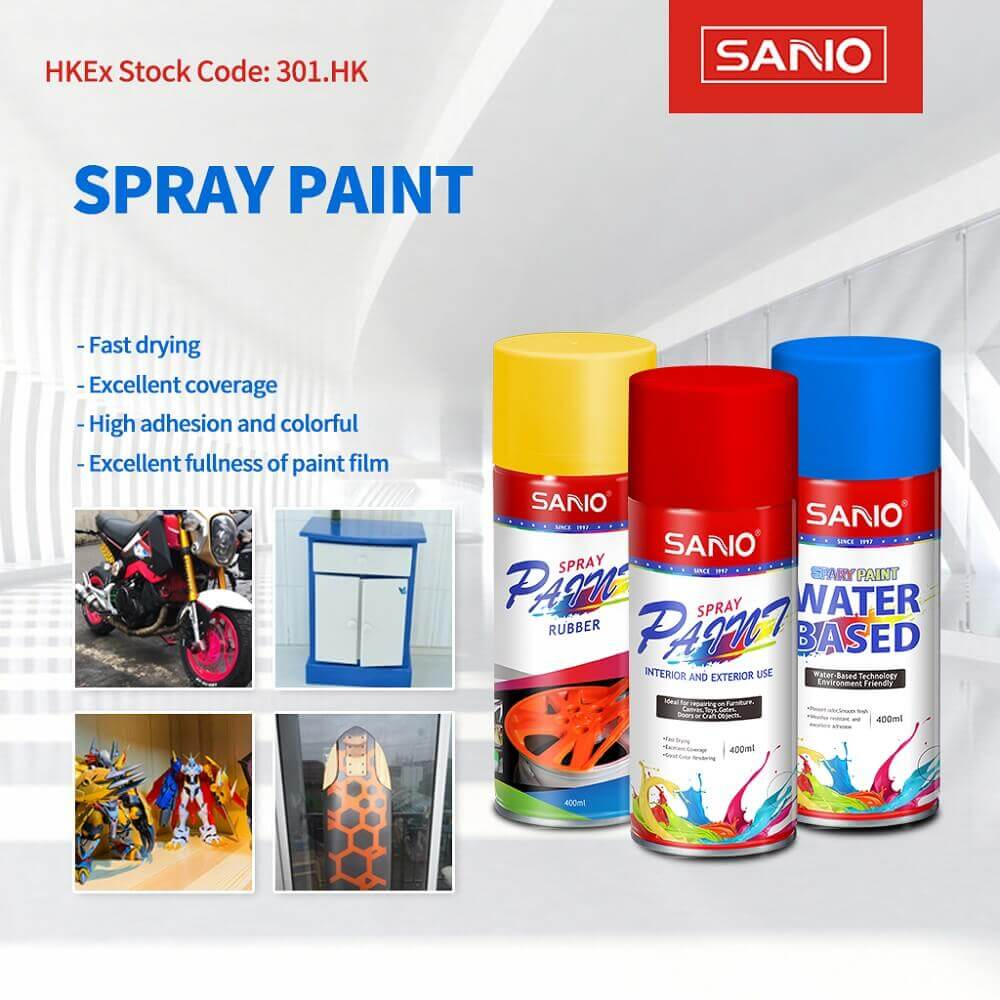
Our Heat-resistant Aerosol Spray Paint is an acrylic aerosol paint made with a heat-resistant formulation, designed for surfaces operating from 400°C to 600°C. It is intended for mufflers, exhaust pipes, radiators, chimneys, grills, and heaters, and is suitable for both indoor and outdoor use. The product provides fast drying, excellent coverage, and superior adhesion, with a spray rate of ≥98.5% and coverage of 150 g/m². Its film hardness is rated ≥HB with adhesion Grade 1–2. Available in white and black, with customization options, this coating is intended for components exposed to high temperatures within the specified 400°C to 600°C range.
The distinction matters because a decorative finish, such as our Spray Paint – Electroplating effect, serves a different purpose. That product creates a shiny, electroplated appearance on metal, ABS plastic, and wood, but its primary role is visual finishing rather than high-temperature service. Visual similarity between products should never be used to infer thermal capability.
How To Read Heat-Related Paint Specifications
Start with the stated temperature range and determine whether it describes continuous service, intermittent exposure, or another test condition. A numerical value has practical meaning only when the circumstances behind it are understood. Users should also check recommended substrates and application conditions before making a selection.
Film thickness deserves attention as well. Applying more material does not necessarily create better thermal performance. Excessive coating thickness can affect drying and film formation, while inadequate coverage may compromise the intended appearance or protective function. Our technical data recommends multiple thin layers with approximately 3 minutes between passes, applied at a distance of about 20 cm, with the surface free of dirt, grease, water, and wax.
Application temperature is specified at 15°C to 40°C. Use should be avoided in low-temperature or humid environments where relative humidity reaches 80% or above. These conditions influence how the coating dries and how smoothly the film develops.
Conclusion
Paint selection becomes much clearer once the actual working environment is defined. Heat source, exposure pattern, substrate movement, surface preparation, film thickness, and surrounding conditions all contribute to how a coating behaves in service. Our approach at SANVO is to examine those factors together rather than rely on temperature terminology alone. With the right context behind the specification, spray paint heat tolerances become a practical reference for matching coating characteristics to the demands placed on a finished surface.